Cardiac Risk Assessment Form
Form Preview
Cardiac Risk Assessment Form
Page 1 of 2
Sign up and start customizing in minutes.
The Cardiac Risk Assessment Form provides clinicians with a structured approach to evaluating and stratifying cardiovascular disease risk using validated prediction models and established risk factor frameworks. It captures the essential variables required for Atherosclerotic Cardiovascular Disease (ASCVD) 10-year risk calculation including age, sex, race, total cholesterol, HDL cholesterol, systolic blood pressure, antihypertensive medication use, diabetes status, and smoking status as defined by the 2013 ACC/AHA Pooled Cohort Equations. The form also documents additional risk-enhancing factors recognized in the 2019 ACC/AHA Primary Prevention Guidelines including family history of premature ASCVD, metabolic syndrome criteria, chronic kidney disease, chronic inflammatory conditions, high-sensitivity C-reactive protein, lipoprotein(a), and coronary artery calcium (CAC) scoring.
This template includes a thorough cardiac symptom assessment evaluating chest pain characteristics using the Diamond-Forrester classification (typical angina, atypical angina, non-cardiac chest pain), dyspnea on exertion graded by NYHA functional class, palpitation characteristics, syncope and presyncope episodes, and peripheral vascular symptoms (claudication, rest pain). The physical examination section captures blood pressure in both arms, heart rate and rhythm, JVP estimation, cardiac auscultation findings (murmurs, gallops, rubs), peripheral pulse assessment, and signs of heart failure (peripheral edema, pulmonary crackles, hepatojugular reflux).
Designed for cardiology practices, internal medicine clinics, preventive medicine programs, and primary care cardiovascular screening initiatives, this form supports quality measure reporting for statin therapy eligibility, blood pressure control targets, and tobacco cessation counseling. It provides the clinical decision support documentation needed for shared decision-making conversations about statin initiation, aspirin therapy, lifestyle modifications, and referral for advanced cardiac testing including stress testing, echocardiography, or coronary artery calcium scoring.
What's included
- ASCVD 10-year risk calculation variables (Pooled Cohort Equations)
- Risk-enhancing factor documentation (CKD, CRP, Lp(a), CAC score, family history)
- Cardiac symptom assessment (Diamond-Forrester chest pain, NYHA class, palpitations)
- Cardiovascular physical examination findings (BP, murmurs, peripheral pulses, edema)
- ECG and laboratory results upload with lipid panel documentation
- Risk category determination, statin eligibility, and cardiovascular prevention plan
- E-signature capture
Who uses this template
- Primary care ASCVD risk stratification and shared decision-making for statin initiation
- Cardiology consultation with comprehensive cardiac symptom and risk factor evaluation
- Preventive medicine cardiovascular screening program documentation
- Pre-surgical cardiac risk clearance using revised cardiac risk index (RCRI) criteria
All form fields
16 fields across 2 pages. Customize any field after signing up.
How to use the Cardiac Risk Assessment Form
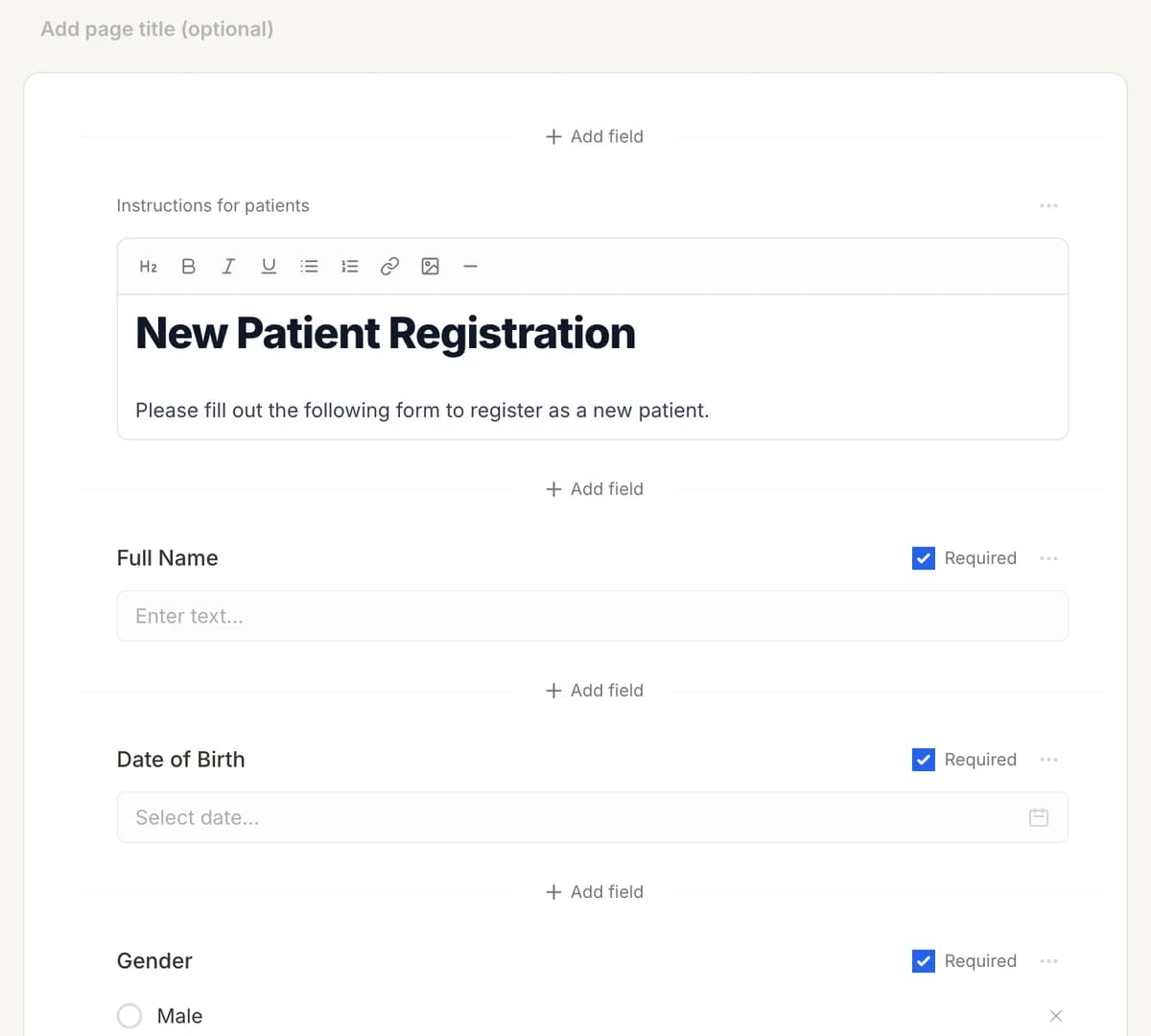
Getting started with this template takes just a few minutes. Sign up for a free Formisoft trial, then select the Cardiac Risk Assessment Form from the template library. The form is ready to use immediately, but you can customize every field, add your practice logo, and adjust the layout to match your workflow.
Setup steps
- 1Choose the template. Find the Cardiac Risk Assessment Form in the template library and click “Use this template” to add it to your account.
- 2Customize fields. Add, remove, or reorder any of the 16 fields. Set fields as required or optional based on your practice needs.
- 3Brand it. Upload your logo, pick your colors, and add a custom welcome message so patients see your practice identity.
- 4Share with patients. Send the form via SMS, email, or embed it on your website. Patients complete it on any device before their visit.
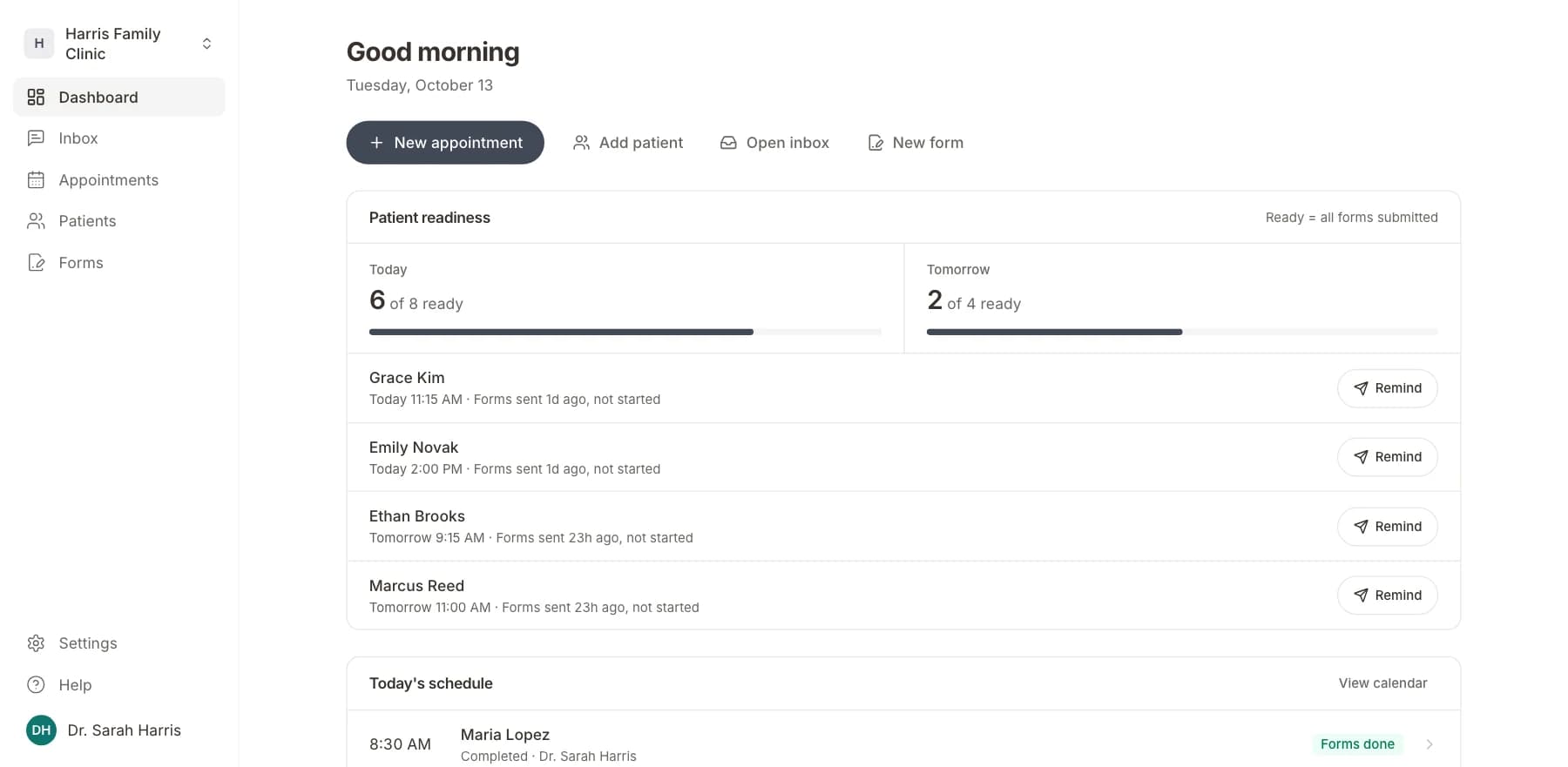
- 5Review submissions. Responses appear in your dashboard in real time. Patient records are created automatically from the data collected.
Frequently asked questions
Is the Cardiac Risk Assessment Form HIPAA compliant?
Yes. All Formisoft templates, including the Cardiac Risk Assessment Form, are HIPAA compliant. Data is encrypted with 256-bit AES at rest and TLS 1.3 in transit. A Business Associate Agreement (BAA) is included on every plan.
Can I customize the fields in this template?
Absolutely. You can add, remove, reorder, or modify any of the 16 fields. You can also add conditional logic, new pages, file uploads, e-signatures, and payment fields.
How do patients fill out this form?
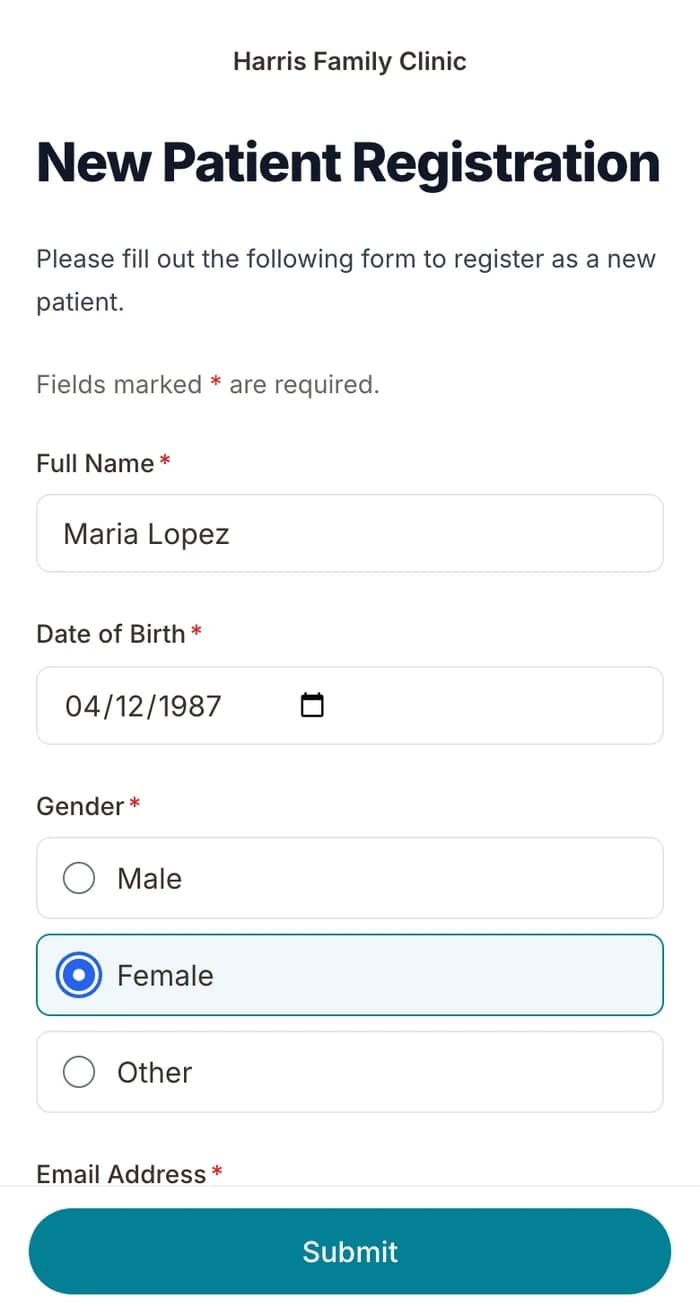
Patients receive a link via SMS, email, or QR code. They complete the form on their phone, tablet, or computer before their appointment. No app download required.
Can I send this form automatically before appointments?
Yes. Formisoft's workflow automation can send intake forms automatically when an appointment is booked. You can set the timing (e.g., 48 hours before the visit) and include reminders for patients who haven't completed it.
Does this template work on mobile devices?
Yes. The Cardiac Risk Assessment Form is fully responsive and works on any device. Most patients complete intake forms on their phone, so every template is optimized for mobile-first use.
Start with this template
Sign up and start customizing the Cardiac Risk Assessment Form for your practice. Set up in minutes.
Related templates
Pre-Operative Assessment Form
A comprehensive pre-surgical evaluation form covering medical history, anesthesia risk classification, medication review, laboratory results, and overall surgical readiness.

Respiratory Assessment
A comprehensive respiratory assessment form evaluating breathing pattern, lung sounds, oxygen saturation, airway status, cough characteristics, and respiratory interventions for patients with pulmonary conditions.

Cardiology Intake Form
Cardiology-specific intake covering cardiac symptoms, chest pain assessment, heart disease risk factors, and cardiovascular history. Designed for cardiologists, electrophysiologists, and heart failure clinics.