Orthopedic Injury Assessment Form
Form Preview

Orthopedic Injury Assessment Form
Page 1 of 2
Sign up and start customizing in minutes.
The Orthopedic Injury Assessment Form provides a systematic framework for evaluating acute and chronic musculoskeletal injuries across all anatomic regions. It captures detailed mechanism of injury information (fall, motor vehicle collision, sports contact, overuse, work-related), injury timing and progression, and the patient's immediate functional limitations. The musculoskeletal examination section documents inspection (deformity, swelling, ecchymosis, open wounds), palpation (point tenderness, crepitus, effusion), active and passive range of motion measurements using goniometry, strength testing against resistance using the Medical Research Council (MRC) grading scale, and joint-specific provocative tests (Lachman, McMurray, Thompson, Ottawa ankle rules, Phalen, Tinel, Hawkins-Kennedy, empty can test).
This template includes comprehensive neurovascular assessment documentation covering distal pulse quality, capillary refill, sensation in dermatomal distributions, and motor function of nerves at risk for the specific injury location. It accommodates imaging documentation including radiograph interpretation (fracture classification using AO/OTA or Salter-Harris systems, joint alignment, hardware position), advanced imaging orders (MRI, CT, bone scan), and point-of-care ultrasound findings. The treatment section captures immobilization type and position, reduction maneuvers performed, weight-bearing status orders, and surgical versus non-operative management decision rationale.
Designed for orthopedic surgery practices, emergency departments, urgent care centers, and sports medicine clinics, this form supports documentation requirements for workers' compensation claims, personal injury cases, and return-to-play clearance decisions. It provides the structured clinical data needed for surgical planning consultations, fracture clinic follow-up tracking, and outcome measurement using validated patient-reported outcome measures (PROMs) such as the DASH, KOOS, or PROMIS physical function scales.
What's included
- Mechanism of injury and anatomic location documentation
- Musculoskeletal examination (inspection, palpation, ROM, strength, provocative tests)
- Distal neurovascular assessment with pulse, sensation, and motor evaluation
- Fracture classification (AO/OTA, Salter-Harris) and imaging result documentation
- Radiograph and advanced imaging upload capability
- Treatment plan with immobilization, weight-bearing status, and surgical decision rationale
- E-signature capture
Who uses this template
- Emergency department acute fracture and dislocation evaluation with neurovascular assessment
- Sports medicine clinic injury evaluation and return-to-play clearance documentation
- Orthopedic surgery consultation with fracture classification and surgical planning notes
- Workers' compensation and personal injury musculoskeletal examination documentation
All form fields
14 fields across 2 pages. Customize any field after signing up.
How to use the Orthopedic Injury Assessment Form
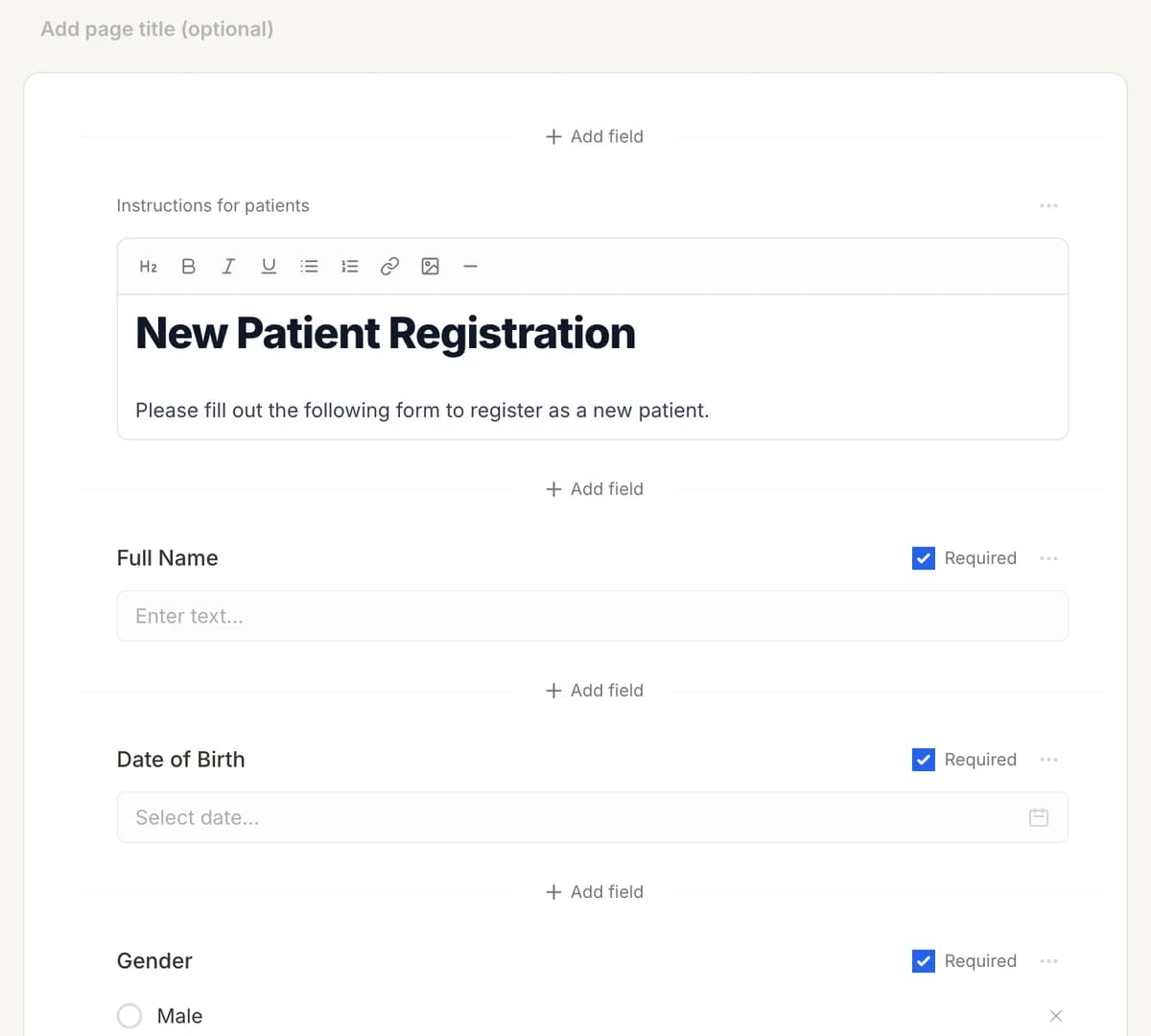
Getting started with this template takes just a few minutes. Sign up for a free Formisoft trial, then select the Orthopedic Injury Assessment Form from the template library. The form is ready to use immediately, but you can customize every field, add your practice logo, and adjust the layout to match your workflow.
Setup steps
- 1Choose the template. Find the Orthopedic Injury Assessment Form in the template library and click “Use this template” to add it to your account.
- 2Customize fields. Add, remove, or reorder any of the 14 fields. Set fields as required or optional based on your practice needs.
- 3Brand it. Upload your logo, pick your colors, and add a custom welcome message so patients see your practice identity.
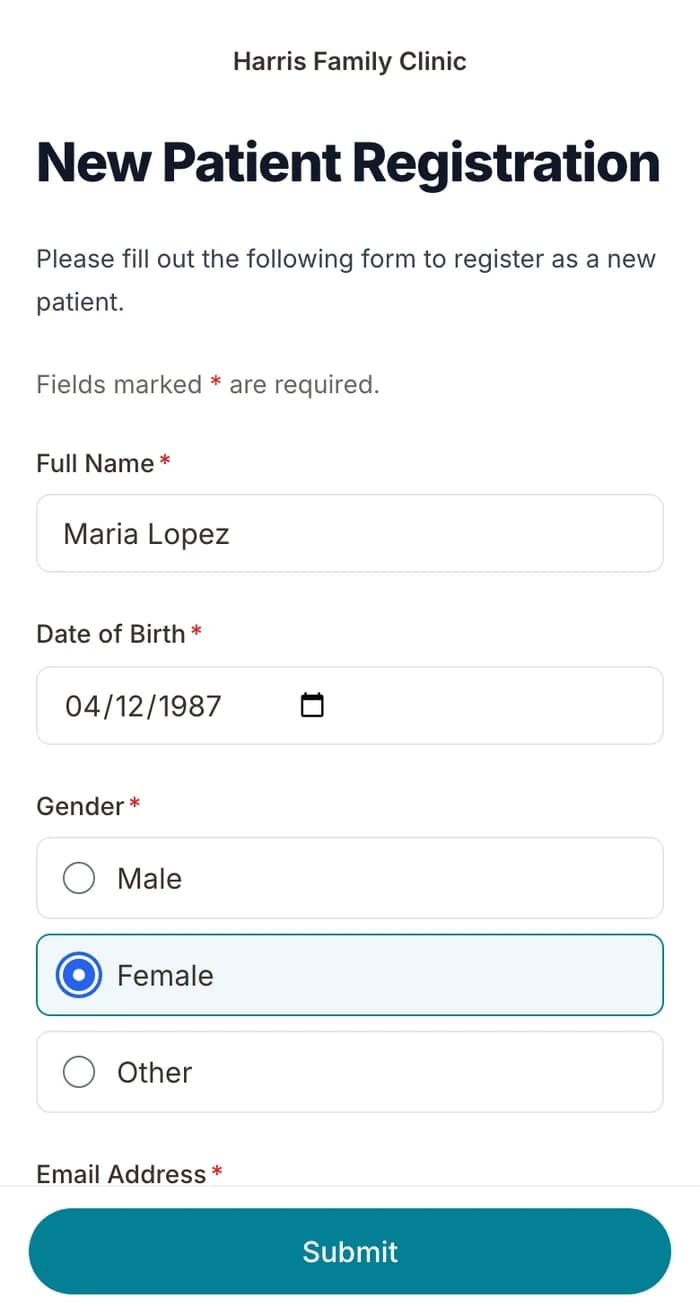
- 4Share with patients. Send the form via SMS, email, or embed it on your website. Patients complete it on any device before their visit.
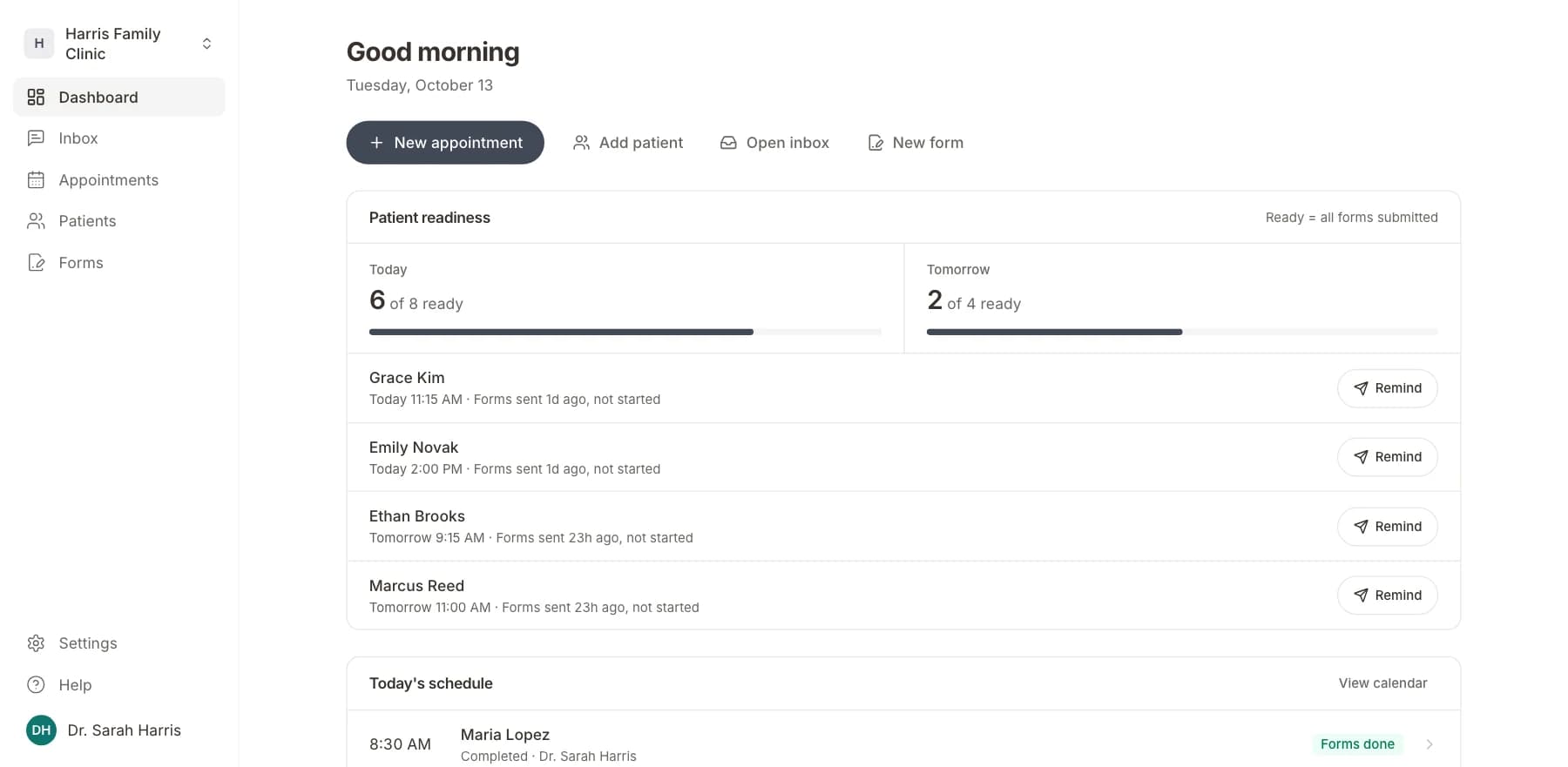
- 5Review submissions. Responses appear in your dashboard in real time. Patient records are created automatically from the data collected.
Frequently asked questions
Is the Orthopedic Injury Assessment Form HIPAA compliant?
Yes. All Formisoft templates, including the Orthopedic Injury Assessment Form, are HIPAA compliant. Data is encrypted with 256-bit AES at rest and TLS 1.3 in transit. A Business Associate Agreement (BAA) is included on every plan.
Can I customize the fields in this template?
Absolutely. You can add, remove, reorder, or modify any of the 14 fields. You can also add conditional logic, new pages, file uploads, e-signatures, and payment fields.
How do patients fill out this form?
Patients receive a link via SMS, email, or QR code. They complete the form on their phone, tablet, or computer before their appointment. No app download required.
Can I send this form automatically before appointments?
Yes. Formisoft's workflow automation can send intake forms automatically when an appointment is booked. You can set the timing (e.g., 48 hours before the visit) and include reminders for patients who haven't completed it.
Does this template work on mobile devices?
Yes. The Orthopedic Injury Assessment Form is fully responsive and works on any device. Most patients complete intake forms on their phone, so every template is optimized for mobile-first use.
Start with this template
Sign up and start customizing the Orthopedic Injury Assessment Form for your practice. Set up in minutes.
Related templates
Pre-Operative Assessment Form
A comprehensive pre-surgical evaluation form covering medical history, anesthesia risk classification, medication review, laboratory results, and overall surgical readiness.

Rehabilitation Intake Form
A comprehensive rehabilitation intake form for patients entering inpatient or outpatient rehab programs, covering functional status, mobility, cognition, and individualized recovery goals.

Post-Operative Assessment Form
A structured post-surgical recovery monitoring form that tracks pain levels, wound status, mobility, potential complications, and discharge readiness criteria.