Braden Scale Pressure Injury Risk Assessment
Form Preview
Braden Scale Pressure Injury Risk Assessment
Page 1 of 2
Sign up and start customizing in minutes.
The Braden Scale Pressure Injury Risk Assessment Form implements the most widely used evidence-based tool for predicting pressure injury development in hospitalized and long-term care patients. It systematically evaluates six subscale domains , sensory perception, moisture exposure, physical activity level, mobility, nutritional status, and friction/shear , each scored on a defined scale that contributes to a composite risk score. Lower total scores indicate higher risk, with established clinical cutpoints that guide the intensity of preventive interventions required. This standardized scoring approach ensures consistent risk identification across care providers and shifts.
The template extends the core Braden subscales with supplementary documentation sections that capture the patient's current skin assessment findings, including any existing pressure injuries staged according to the National Pressure Injury Advisory Panel (NPIAP) classification system. It records the specific preventive interventions implemented based on the risk score, such as repositioning schedules, support surface selection, nutritional supplementation, and moisture management strategies. A section for documenting contributing comorbidities like diabetes, peripheral vascular disease, and immunosuppression provides the clinical context needed to interpret scores and individualize prevention plans.
Designed for acute care hospitals, intensive care units, skilled nursing facilities, long-term acute care hospitals, and home health agencies, this form supports compliance with CMS Hospital-Acquired Condition (HAC) reduction program requirements and Joint Commission quality metrics for pressure injury prevention. It enables nursing staff to perform rapid, reproducible risk assessments that translate directly into actionable care plans, while providing quality improvement teams with the structured data needed to track institutional pressure injury incidence and prevention program effectiveness.
What's included
- Complete Braden Scale with all six subscale scoring domains
- Composite risk score calculation with clinical cutpoint classification
- Current skin assessment and existing pressure injury staging documentation
- Preventive intervention checklist linked to risk level
- Contributing comorbidity documentation for individualized care planning
- Assessor signature and serial assessment tracking capability
Who uses this template
- Hospital admission and daily nursing pressure injury risk screening
- ICU patient skin integrity assessment and repositioning schedule documentation
- Skilled nursing facility resident pressure injury prevention program compliance
- Home health agency initial and periodic skin assessment and risk evaluation
All form fields
15 fields across 2 pages. Customize any field after signing up.
How to use the Braden Scale Pressure Injury Risk Assessment
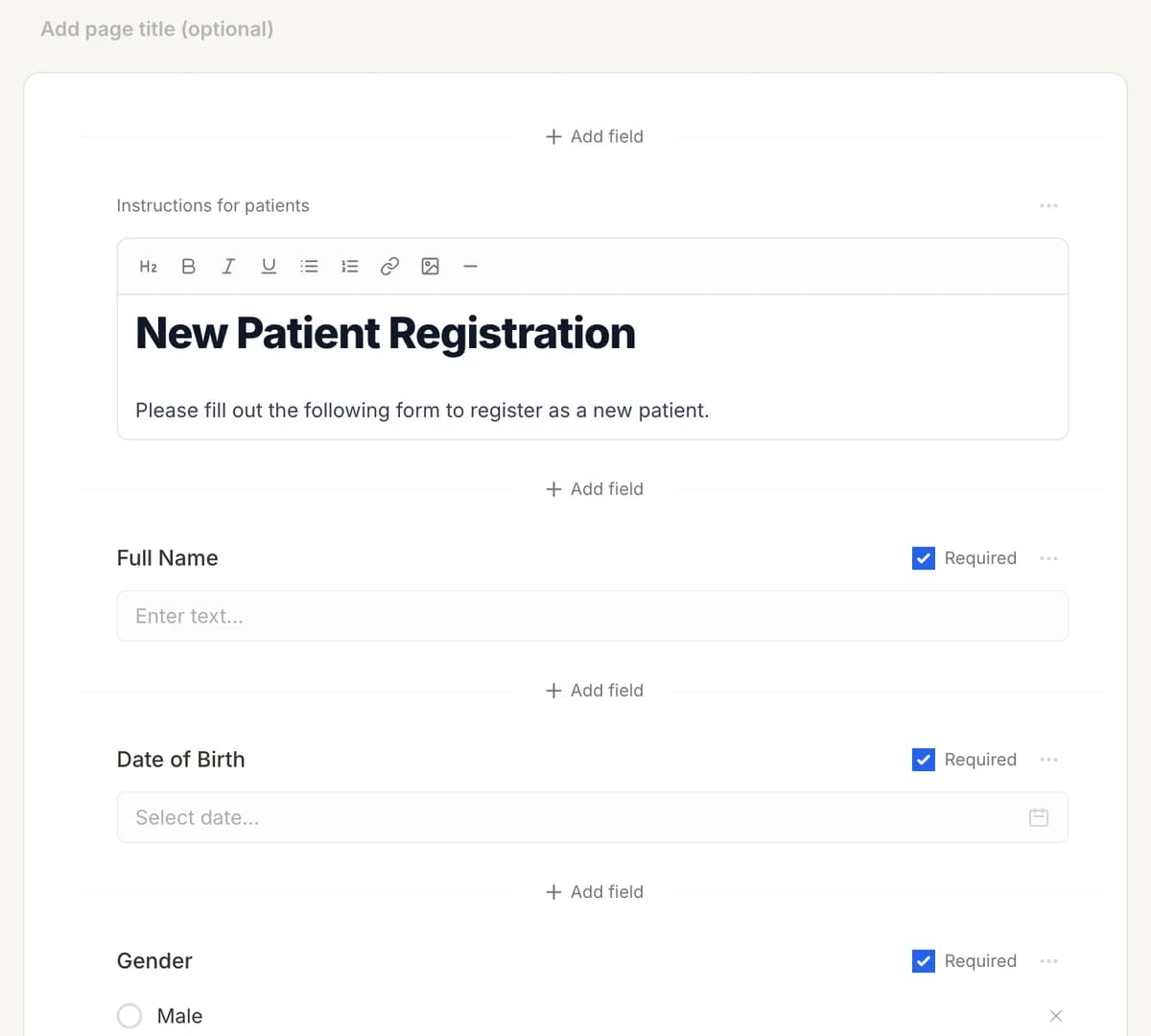
Getting started with this template takes just a few minutes. Sign up for a free Formisoft trial, then select the Braden Scale Pressure Injury Risk Assessment from the template library. The form is ready to use immediately, but you can customize every field, add your practice logo, and adjust the layout to match your workflow.
Setup steps
- 1Choose the template. Find the Braden Scale Pressure Injury Risk Assessment in the template library and click “Use this template” to add it to your account.
- 2Customize fields. Add, remove, or reorder any of the 15 fields. Set fields as required or optional based on your practice needs.
- 3Brand it. Upload your logo, pick your colors, and add a custom welcome message so patients see your practice identity.
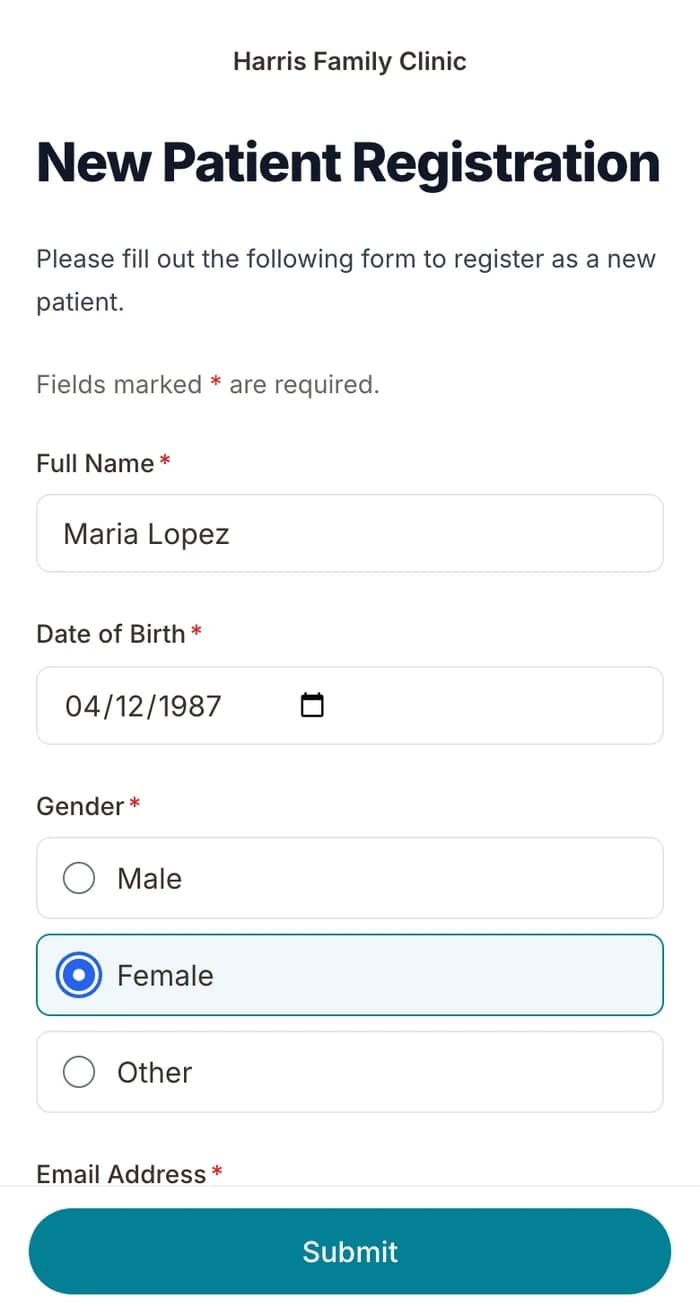
- 4Share with patients. Send the form via SMS, email, or embed it on your website. Patients complete it on any device before their visit.
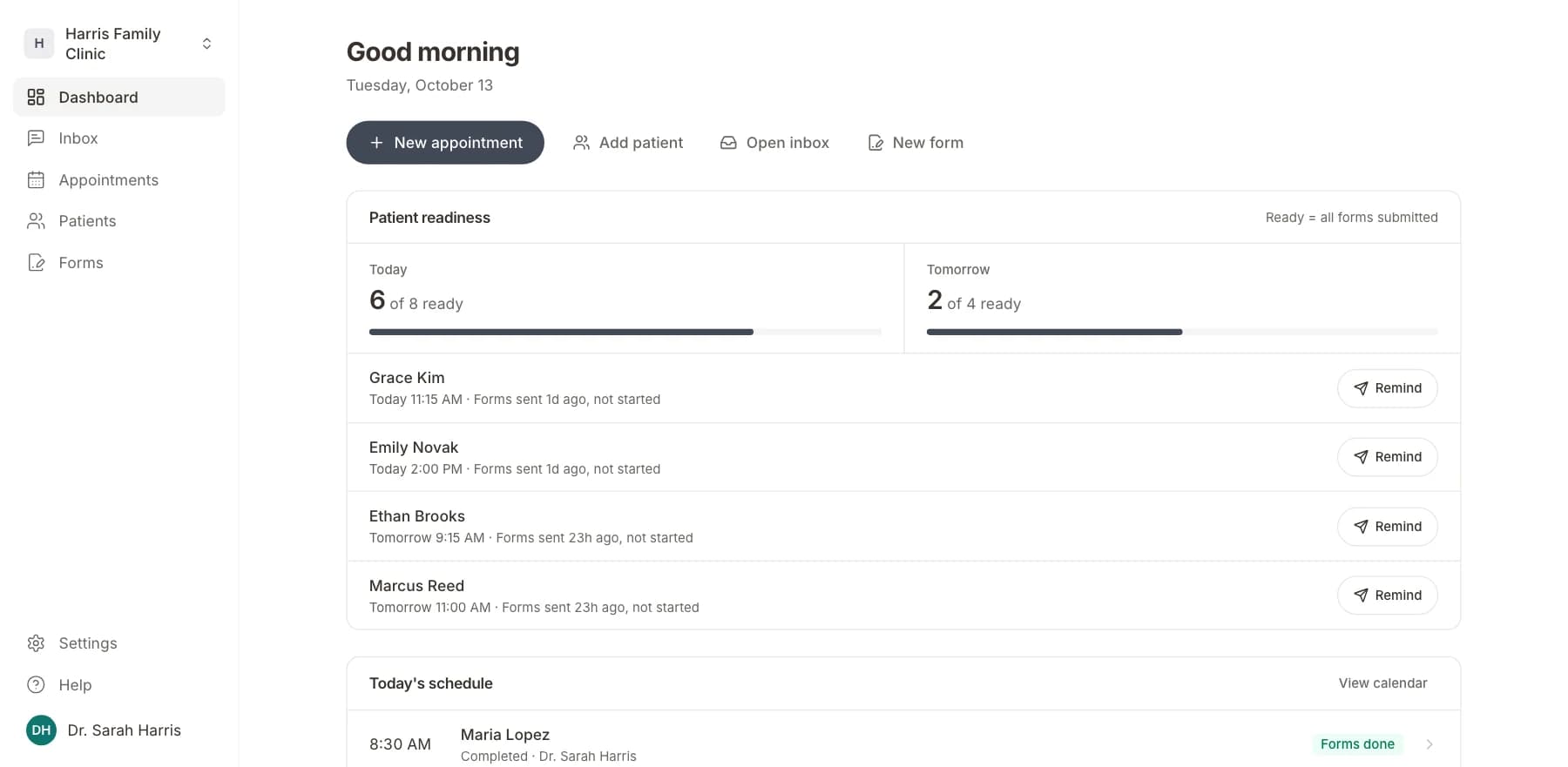
- 5Review submissions. Responses appear in your dashboard in real time. Patient records are created automatically from the data collected.
Frequently asked questions
Is the Braden Scale Pressure Injury Risk Assessment HIPAA compliant?
Yes. All Formisoft templates, including the Braden Scale Pressure Injury Risk Assessment, are HIPAA compliant. Data is encrypted with 256-bit AES at rest and TLS 1.3 in transit. A Business Associate Agreement (BAA) is included on every plan.
Can I customize the fields in this template?
Absolutely. You can add, remove, reorder, or modify any of the 15 fields. You can also add conditional logic, new pages, file uploads, e-signatures, and payment fields.
How do patients fill out this form?
Patients receive a link via SMS, email, or QR code. They complete the form on their phone, tablet, or computer before their appointment. No app download required.
Can I send this form automatically before appointments?
Yes. Formisoft's workflow automation can send intake forms automatically when an appointment is booked. You can set the timing (e.g., 48 hours before the visit) and include reminders for patients who haven't completed it.
Does this template work on mobile devices?
Yes. The Braden Scale Pressure Injury Risk Assessment is fully responsive and works on any device. Most patients complete intake forms on their phone, so every template is optimized for mobile-first use.
Start with this template
Sign up and start customizing the Braden Scale Pressure Injury Risk Assessment for your practice. Set up in minutes.
Related templates
Wound Care Intake Form
Wound care intake covering wound history, etiology assessment, nutritional status, vascular evaluation, pain assessment, and prior wound treatment documentation. For wound care centers, vascular clinics, and home health wound management.

Rehabilitation Intake Form
A comprehensive rehabilitation intake form for patients entering inpatient or outpatient rehab programs, covering functional status, mobility, cognition, and individualized recovery goals.
Geriatrics Intake Form
Geriatrics-specific intake covering functional assessment, fall risk screening, cognitive evaluation, polypharmacy review, advance directives, and caregiver information. For geriatricians and senior care practices.