Medication Reconciliation Form
Asks about prescription medications, over-the-counter medications, and vitamins & supplements. Built for hospital admission and discharge processes.
- Questions
- 10
- Page
- 1
- Time
- about 3 min
Includes
- E-signature
- Medication list
- Allergy list
Your practice
Medication Reconciliation Form
Live preview. Tap through it like a patient.
Who it is for
- Hospital admission and discharge processes
- Transitions between care settings
- Multi-provider care coordination
- Annual medication review visits
What's inside
- Full NameText · Required
- Prescription MedicationsMedications
- Over-the-Counter MedicationsMedications
- Vitamins & SupplementsLong Text
- Medication AllergiesAllergies
- Date Each Medication StartedDate
- Adherence AssessmentLong Text
- Pharmacy InformationText
- Date of BirthDate
- Provider Verification SignatureE-Signature
From form to a ready patient
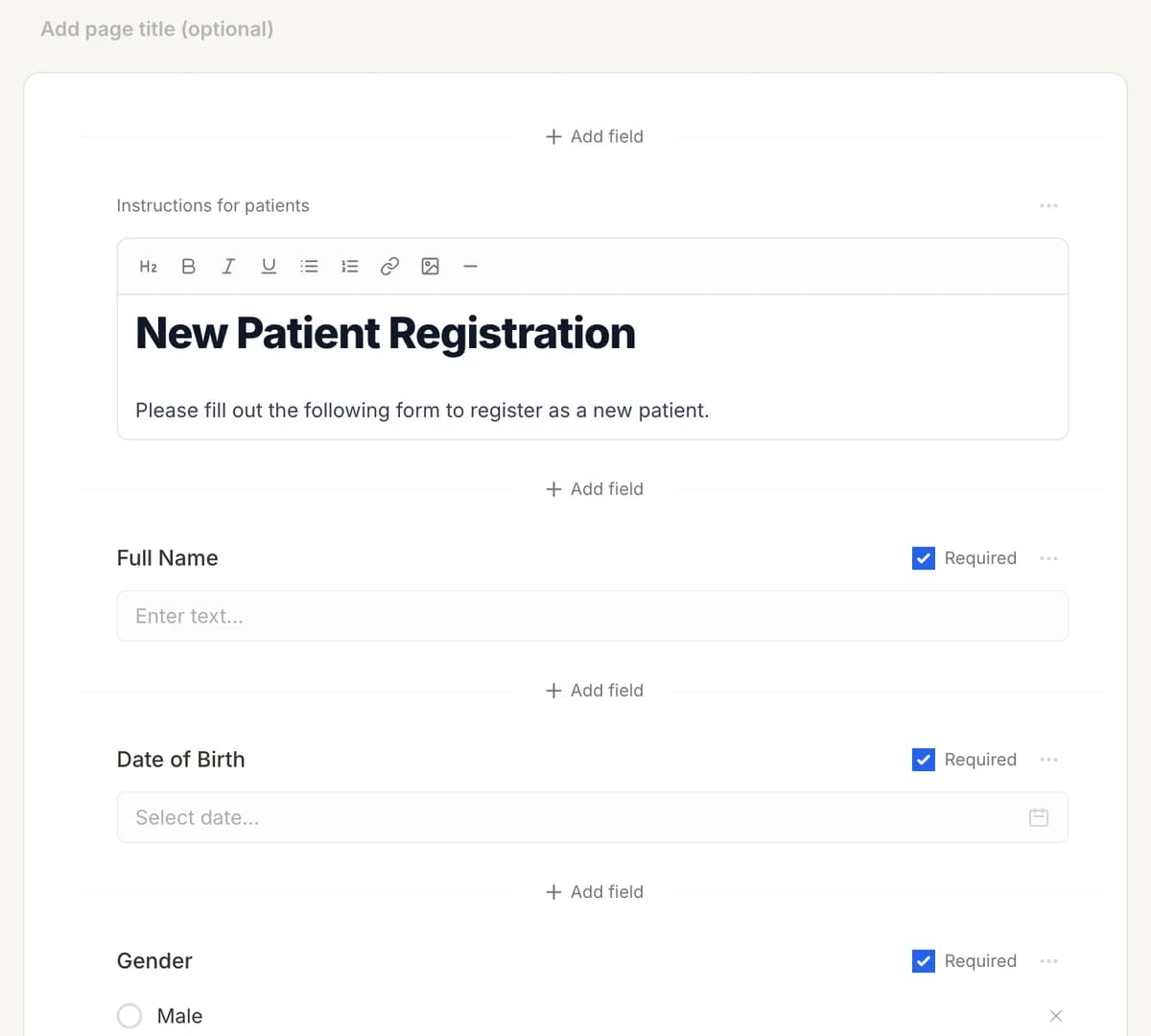
01
Make it yours
Reword, reorder, or add to the Medication Reconciliation Form, and add your logo.
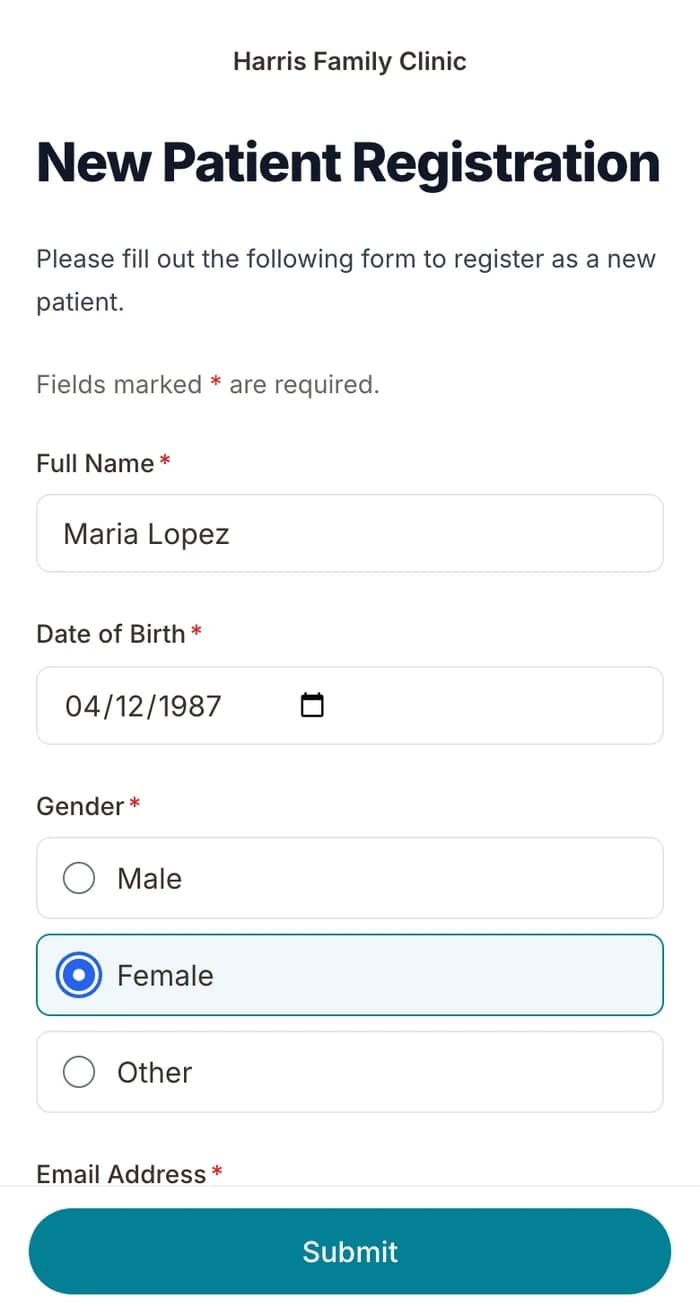
02
Patients finish it at home
A secure link by text or email, filled out on their phone before the visit. No app.
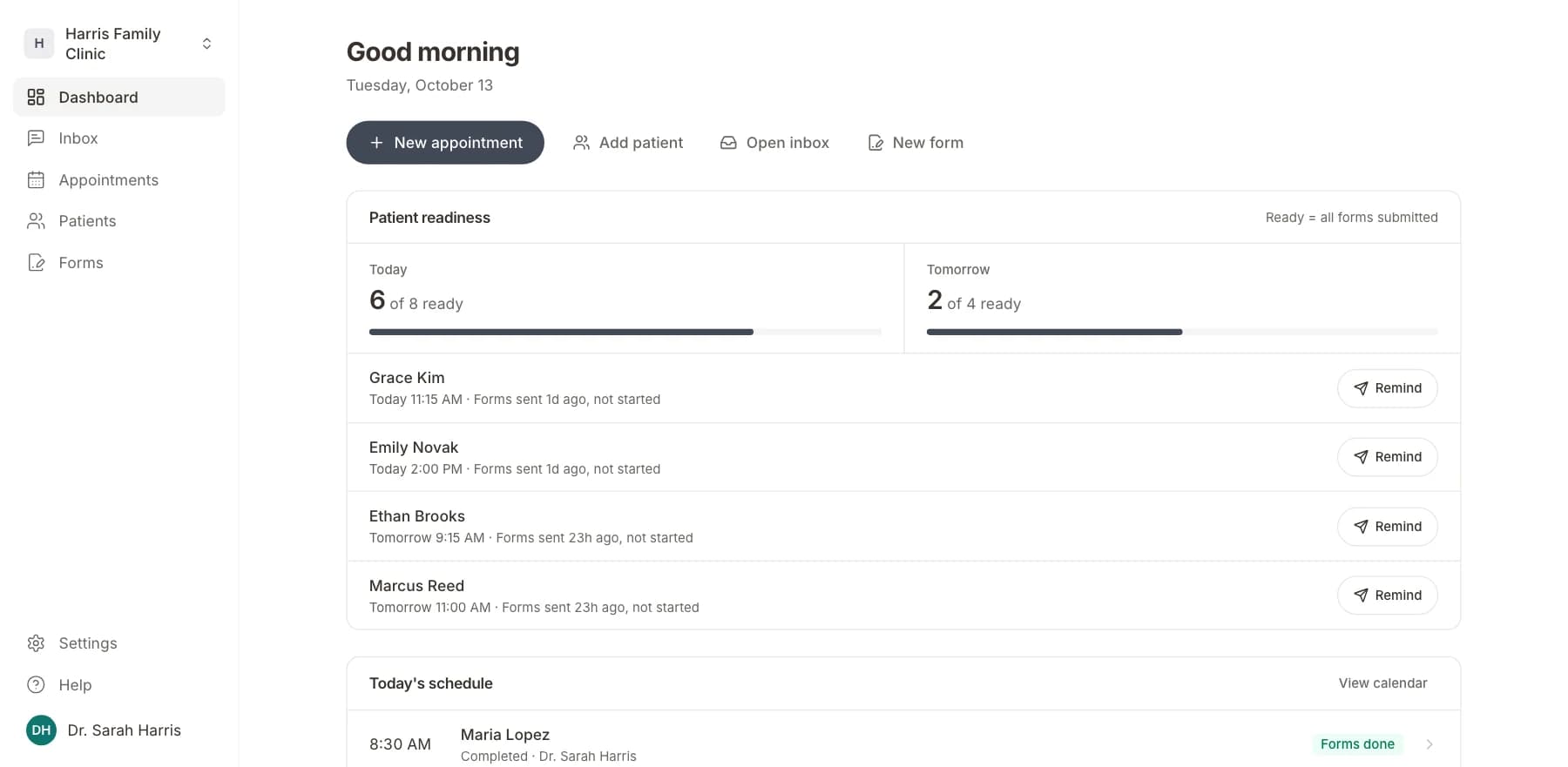
03
Your team sees who is ready
Each visit shows as ready once its forms are in. Answers land on the patient record.
Related templates
All templatesMedication Refill Request FormRegistration · 8 questions
High-Risk Medication Consent FormConsent · 12 questions
High-Risk Medication ConsentConsent · 14 questions
Emergency Contact FormRegistration · 11 questions
Allergy History FormMedical History · 10 questions
Colonoscopy Medical HistoryMedical History · 9 questions
Questions
Send it before the visit, so patients arrive ready.
Add the Medication Reconciliation Form to your account and make it yours in a few minutes.
Cancel anytime · BAA included