Pediatric Asthma Severity Assessment
Form Preview

Pediatric Asthma Severity Assessment
Page 1 of 2
Sign up and start customizing in minutes.
The Pediatric Asthma Severity Assessment Form provides a structured clinical tool for evaluating and classifying asthma severity and control in pediatric patients, aligned with the National Asthma Education and Prevention Program (NAEPP) Expert Panel Report guidelines. It captures the key impairment and risk domain metrics including daytime symptom frequency, nighttime awakening episodes, short-acting beta-agonist (rescue inhaler) use, interference with normal activity, and spirometry or peak flow measurements when available. These data points map directly to the four-tier severity classification system , intermittent, mild persistent, moderate persistent, and severe persistent , that drives stepwise therapy decisions.
The template includes age-appropriate assessment sections that account for the differences in asthma presentation and management across developmental stages, from infants and toddlers (0-4 years) through school-age children (5-11 years) and adolescents (12+ years). It documents current controller and rescue medications with adherence assessment, identifies known asthma triggers including environmental allergens, respiratory infections, exercise, and irritant exposures, and captures vaccination status relevant to respiratory health. An asthma action plan section allows providers to document green/yellow/red zone parameters and corresponding medication instructions.
Designed for pediatric primary care offices, pediatric pulmonology clinics, allergy and immunology practices, emergency departments, and school-based health centers, this form supports consistent severity classification that drives evidence-based step therapy. It provides the documentation foundation needed for tracking asthma control over time, adjusting maintenance therapy, evaluating the need for specialist referral, and demonstrating quality metric compliance for asthma management programs.
What's included
- NAEPP-aligned impairment domain assessment for symptom frequency and activity limitation
- Age-stratified evaluation sections for infants, school-age children, and adolescents
- Four-tier severity classification with stepwise therapy mapping
- Current medication inventory with adherence assessment
- Trigger identification checklist and asthma action plan documentation
- Peak flow or spirometry recording and vaccination status
- Medical conditions checklist
- E-signature capture
- Structured medication list with dosage and frequency tracking
Who uses this template
- Pediatric primary care asthma severity classification and step therapy initiation
- Pediatric pulmonology clinic serial asthma control monitoring and treatment adjustment
- Emergency department acute asthma exacerbation evaluation and discharge planning
- School-based health center asthma management and action plan documentation
All form fields
14 fields across 2 pages. Customize any field after signing up.
How to use the Pediatric Asthma Severity Assessment
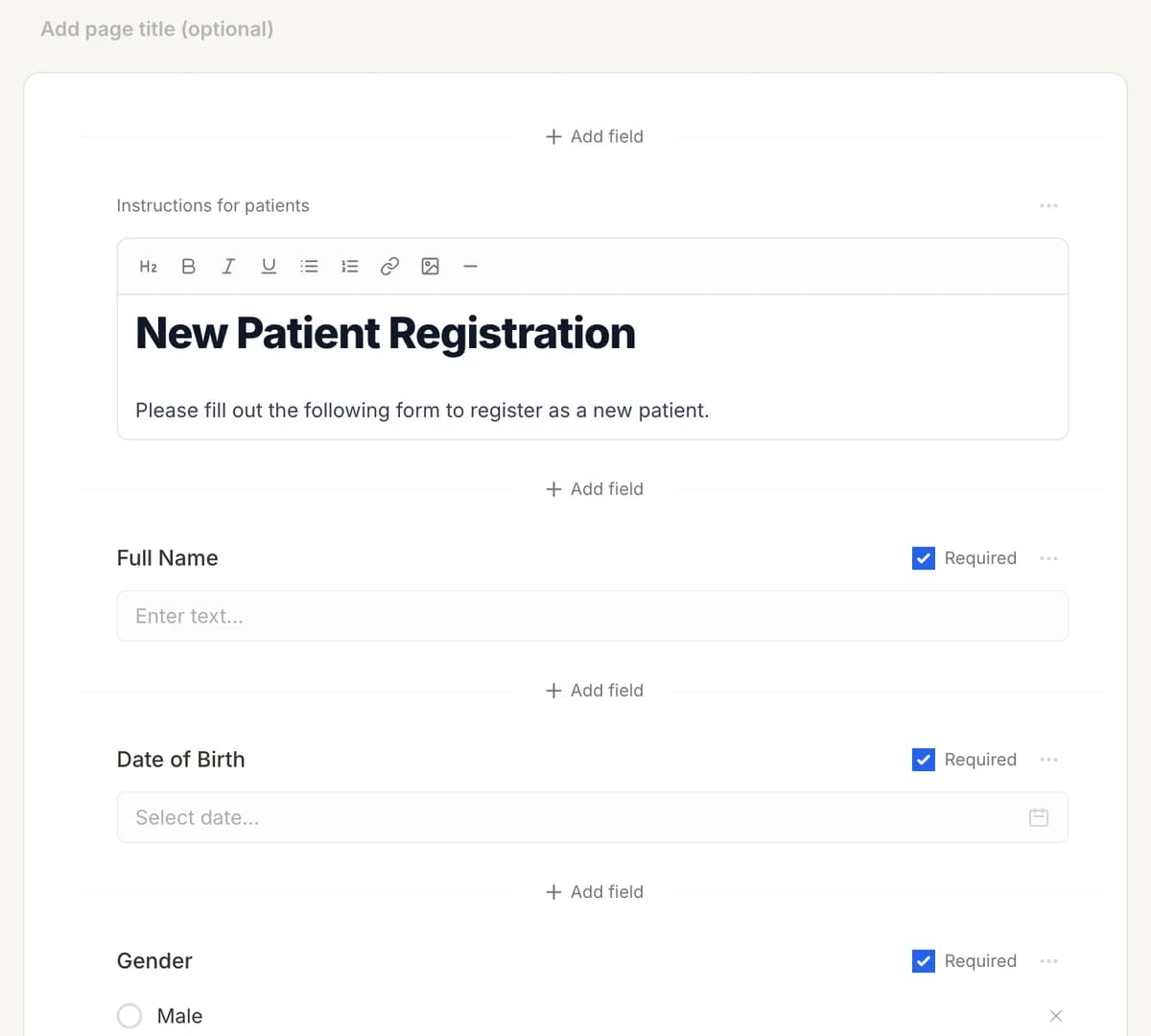
Getting started with this template takes just a few minutes. Sign up for a free Formisoft trial, then select the Pediatric Asthma Severity Assessment from the template library. The form is ready to use immediately, but you can customize every field, add your practice logo, and adjust the layout to match your workflow.
Setup steps
- 1Choose the template. Find the Pediatric Asthma Severity Assessment in the template library and click “Use this template” to add it to your account.
- 2Customize fields. Add, remove, or reorder any of the 14 fields. Set fields as required or optional based on your practice needs.
- 3Brand it. Upload your logo, pick your colors, and add a custom welcome message so patients see your practice identity.
- 4Share with patients. Send the form via SMS, email, or embed it on your website. Patients complete it on any device before their visit.
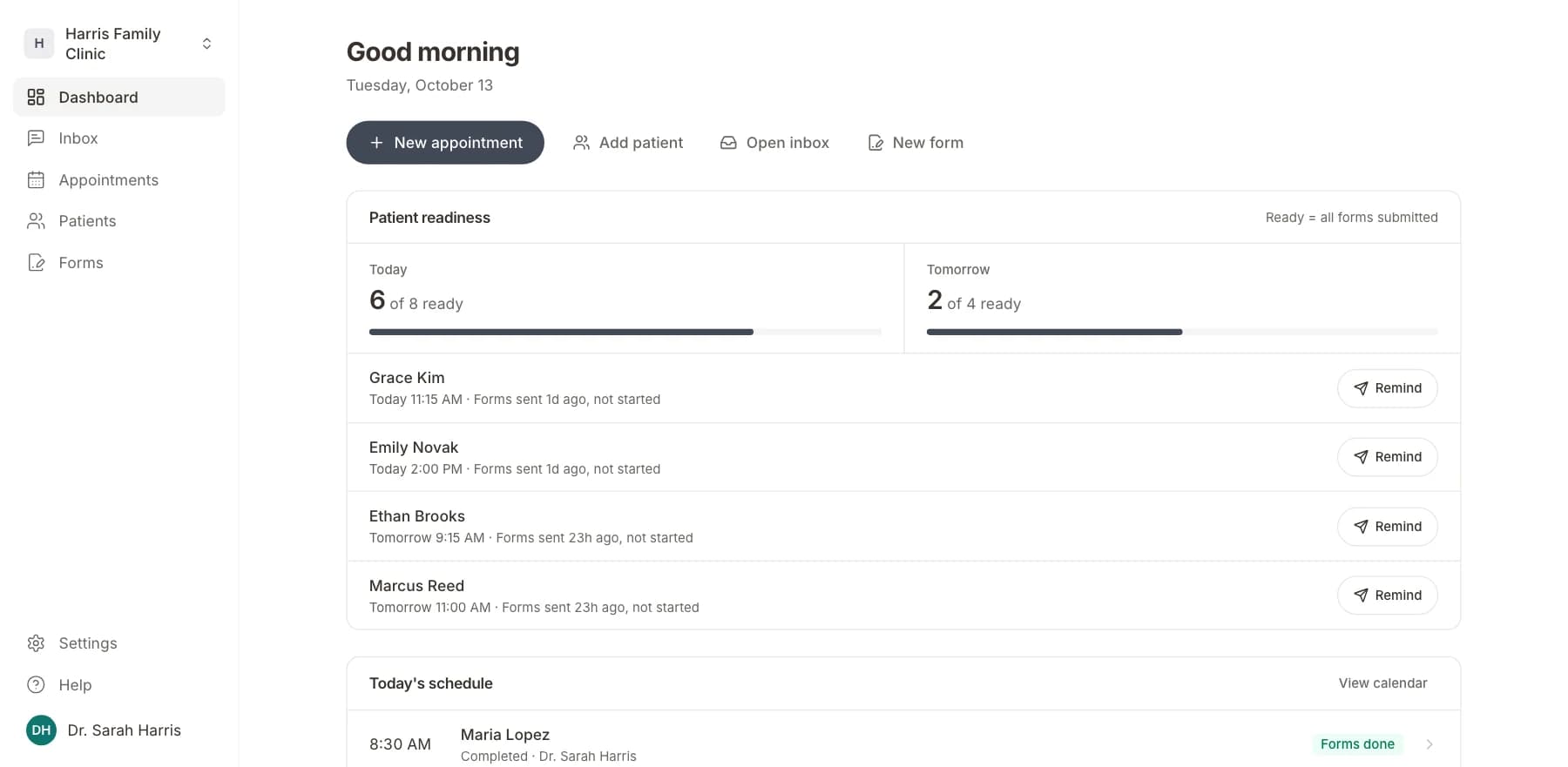
- 5Review submissions. Responses appear in your dashboard in real time. Patient records are created automatically from the data collected.
Frequently asked questions
Is the Pediatric Asthma Severity Assessment HIPAA compliant?
Yes. All Formisoft templates, including the Pediatric Asthma Severity Assessment, are HIPAA compliant. Data is encrypted with 256-bit AES at rest and TLS 1.3 in transit. A Business Associate Agreement (BAA) is included on every plan.
Can I customize the fields in this template?
Absolutely. You can add, remove, reorder, or modify any of the 14 fields. You can also add conditional logic, new pages, file uploads, e-signatures, and payment fields.
How do patients fill out this form?
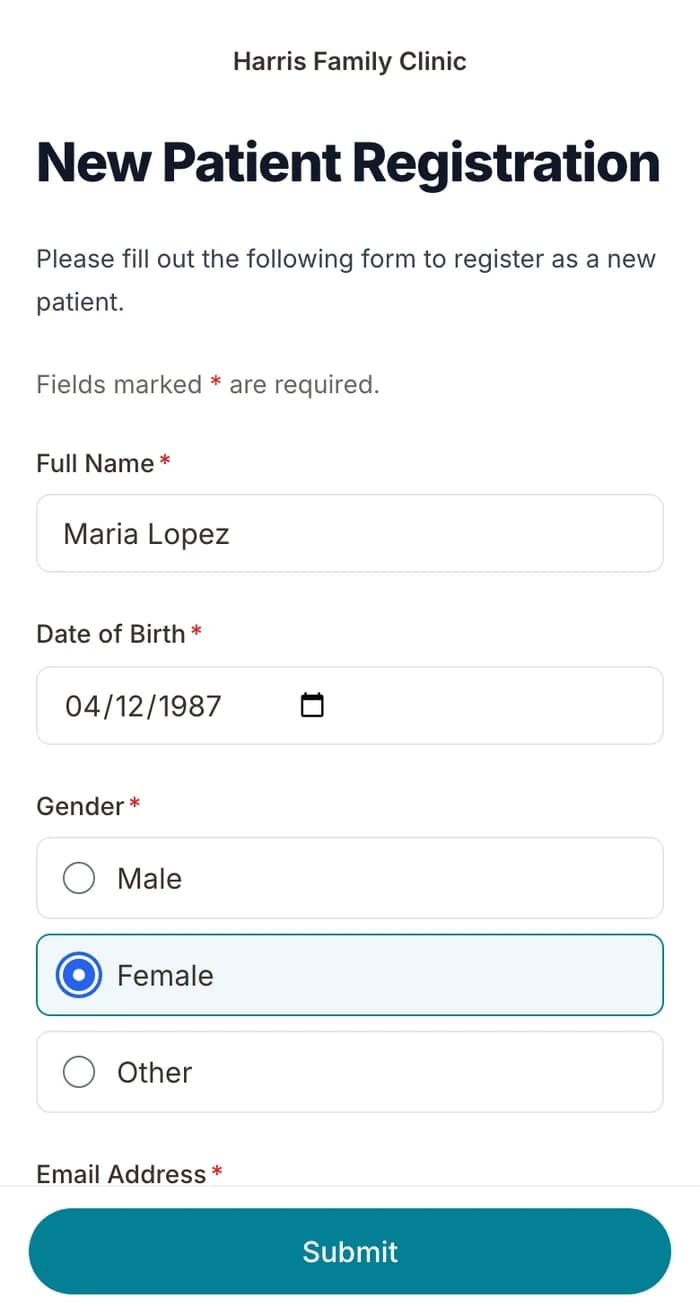
Patients receive a link via SMS, email, or QR code. They complete the form on their phone, tablet, or computer before their appointment. No app download required.
Can I send this form automatically before appointments?
Yes. Formisoft's workflow automation can send intake forms automatically when an appointment is booked. You can set the timing (e.g., 48 hours before the visit) and include reminders for patients who haven't completed it.
Does this template work on mobile devices?
Yes. The Pediatric Asthma Severity Assessment is fully responsive and works on any device. Most patients complete intake forms on their phone, so every template is optimized for mobile-first use.
Start with this template
Sign up and start customizing the Pediatric Asthma Severity Assessment for your practice. Set up in minutes.
Related templates
Pediatric Intake Form
Child-specific intake form with developmental milestones, immunization records, birth history, school information, and parent/guardian details. Designed for pediatric and family medicine practices.

Pulmonology Intake Form
Pulmonology-specific intake covering respiratory symptoms, asthma and COPD assessment, smoking history, pulmonary function testing, and oxygen therapy documentation. For pulmonologists and respiratory care clinics.

Allergy & Immunology Intake Form
Allergy and immunology intake with detailed allergy history, environmental triggers, reaction severity, immunodeficiency screening, and medication/immunotherapy history. For allergists and immunologists.