Eating Disorder Screening Form
Asks about current weight & height, weight history, and dieting & food preoccupation. Built for primary care and pediatric offices screening for disordered eating during routine visits.
- Questions
- 13
- Pages
- 2
- Time
- about 3 min
Includes
- Consent agreement
- Emergency contact
Your practice
Eating Disorder Screening Form
Page 1 of 2 · Your information
Live preview. Tap through it like a patient.
Who it is for
- Primary care and pediatric offices screening for disordered eating during routine visits
- College and university health centers identifying students at risk for eating disorders
- Sports medicine clinics evaluating athletes for female or male athlete triad
- Outpatient psychiatry and therapy practices assessing eating disorder severity at intake
What's inside
Before you publish: Clinical review required: this worksheet does not calculate scores, diagnose, or recommend treatment. Confirm the questions and response options against your approved assessment protocol before use.
Page 1 · Your information
- Patient NameText · Required
- Date of BirthDate
- Current Weight & HeightText
- Weight HistoryLong Text
- Dieting & Food PreoccupationLong Text
Page 2 · Additional details
- Exercise PatternsLong Text
- Body Image AssessmentLong Text
- Dietary Patterns & RestrictionsLong Text
- Screening Score & Risk LevelLong Text
- Emergency ContactEmergency Contact
From form to a ready patient
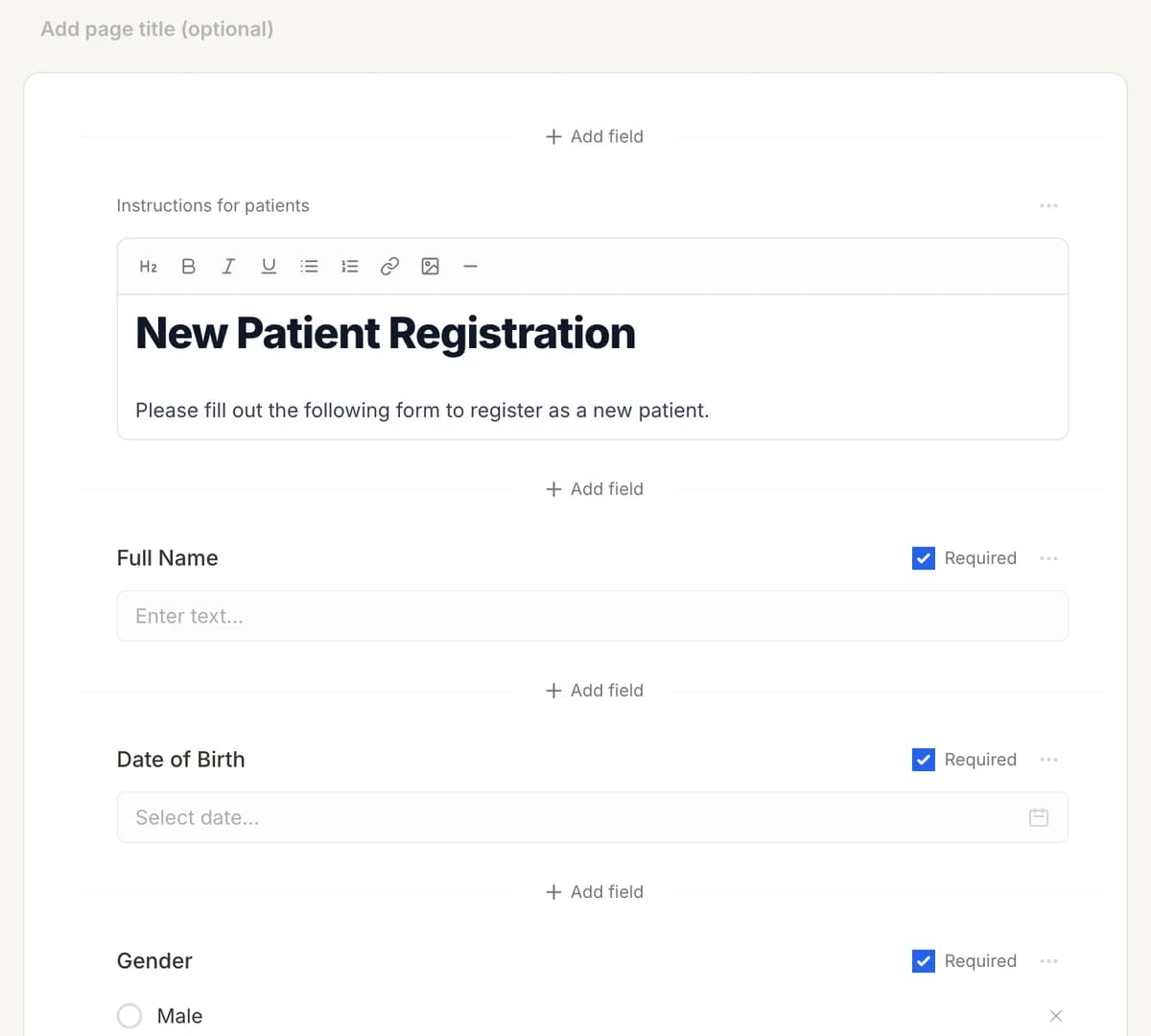
01
Make it yours
Reword, reorder, or add to the Eating Disorder Screening Form, and add your logo.
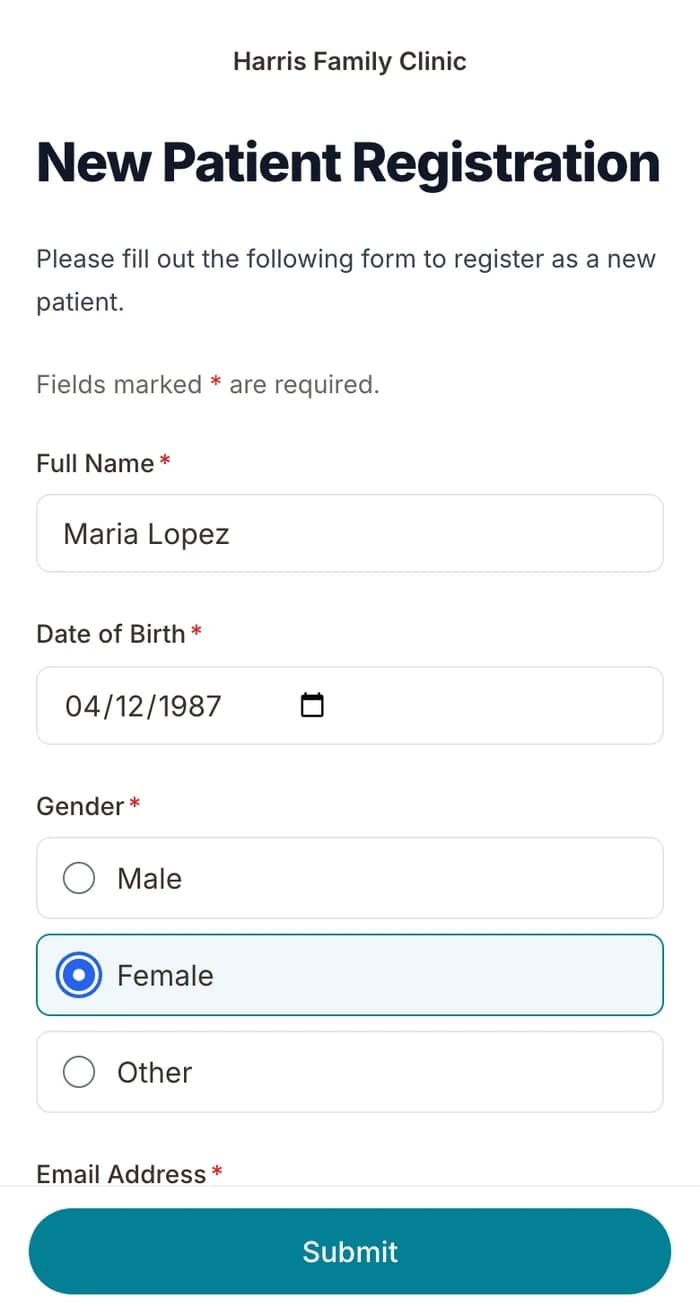
02
Patients finish it at home
A secure link by text or email, filled out on their phone before the visit. No app.
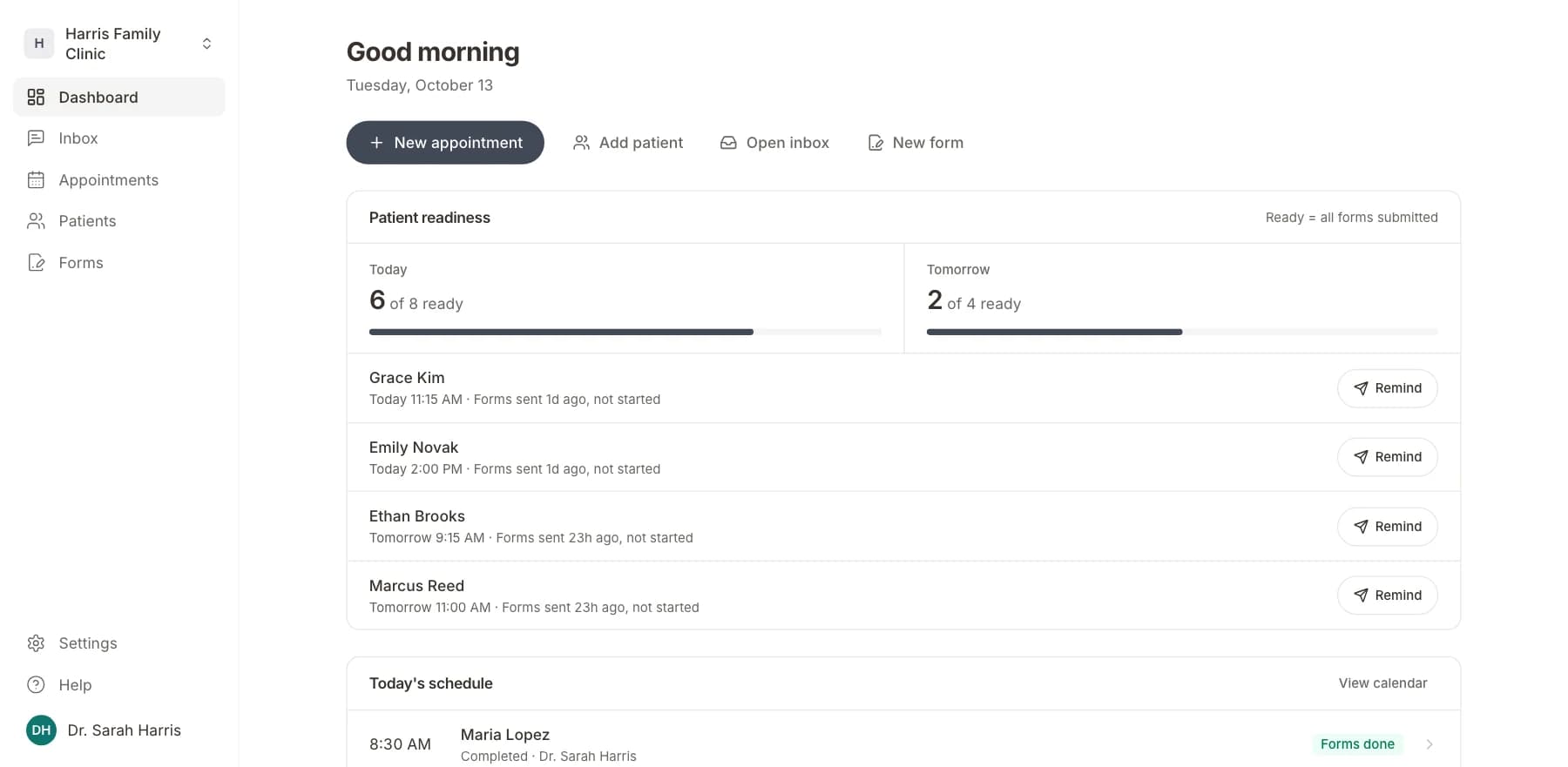
03
Your team sees who is ready
Each visit shows as ready once its forms are in. Answers land on the patient record.
Related templates
All templatesPHQ-9 Depression ScreeningScreening · 13 questions
GAD-7 Anxiety ScreeningScreening · 11 questions
Nutritional Assessment FormAssessment · 14 questions
Pediatric Intake FormIntake · 10 questions
ACE (Adverse Childhood Experiences) ScreeningScreening · 14 questions
PCL-5 PTSD Screening ChecklistScreening · 22 questions
Questions
Send it before the visit, so patients arrive ready.
Add the Eating Disorder Screening Form to your account and make it yours in a few minutes.
Cancel anytime · BAA included