Osteoporosis and Fracture History Form
Form Preview

Osteoporosis and Fracture History Form
Page 1 of 3
Sign up and start customizing in minutes.
This osteoporosis and fracture history form is a specialized clinical tool designed for healthcare providers who assess and manage bone health conditions. It enables systematic documentation of all recognized risk factors for osteoporosis and fragility fractures, allowing providers to calculate fracture risk scores and determine appropriate intervention strategies. The form captures the full scope of information needed for bone health evaluation, from demographic risk factors and hormonal history to lifestyle habits and previous skeletal events. By consolidating this data into a single structured intake, the form ensures that providers have the complete clinical picture necessary to guide screening, prevention, and treatment decisions.
The template collects detailed patient data across several key domains. It records patient demographics including name and date of birth, then documents a thorough fracture history covering specific fracture locations, the circumstances surrounding each fracture, and healing outcomes. The form assesses family history of osteoporosis and hip fractures in first-degree relatives. Calcium and vitamin D intake levels are evaluated through dietary and supplementation questions. A comprehensive medication review captures current prescriptions with particular attention to bone-affecting drugs such as corticosteroids, aromatase inhibitors, and anticonvulsants. Menopause status and hormonal history are recorded alongside a fall history section that identifies environmental, neurological, and medication-related fall risk factors. Previous bone density test results and dates are documented to track changes over time.
This form is essential for rheumatology practices, endocrinology clinics, orthopedic bone health programs, geriatric medicine practices, and women's health centers. It supports compliance with clinical guidelines from the National Osteoporosis Foundation, the Endocrine Society, and the American College of Rheumatology for osteoporosis screening and management. Providers use the collected data to calculate FRAX scores, determine candidacy for dual-energy X-ray absorptiometry (DXA) scanning, and evaluate appropriateness of pharmacologic therapies including bisphosphonates, denosumab, and anabolic agents. The comprehensive fall risk assessment supports development of multidisciplinary fall prevention plans, ultimately reducing fracture incidence and improving quality of life for patients with or at risk for osteoporosis.
What's included
- Detailed fracture history
- Family history of osteoporosis
- Menopause and hormone history
- Calcium and vitamin D intake
- Weight-bearing exercise habits
- Steroid and medication use
- Previous bone density results
- Fall risk assessment
- Smoking and alcohol history
- Secondary osteoporosis causes
- Current bone health medications
Who uses this template
- Rheumatology Practices
- Endocrinology Clinics
- Orthopedic Bone Health Programs
- Geriatric Medicine Practices
- Women's Health Centers
All form fields
10 fields across 3 pages. Customize any field after signing up.
How to use the Osteoporosis and Fracture History Form
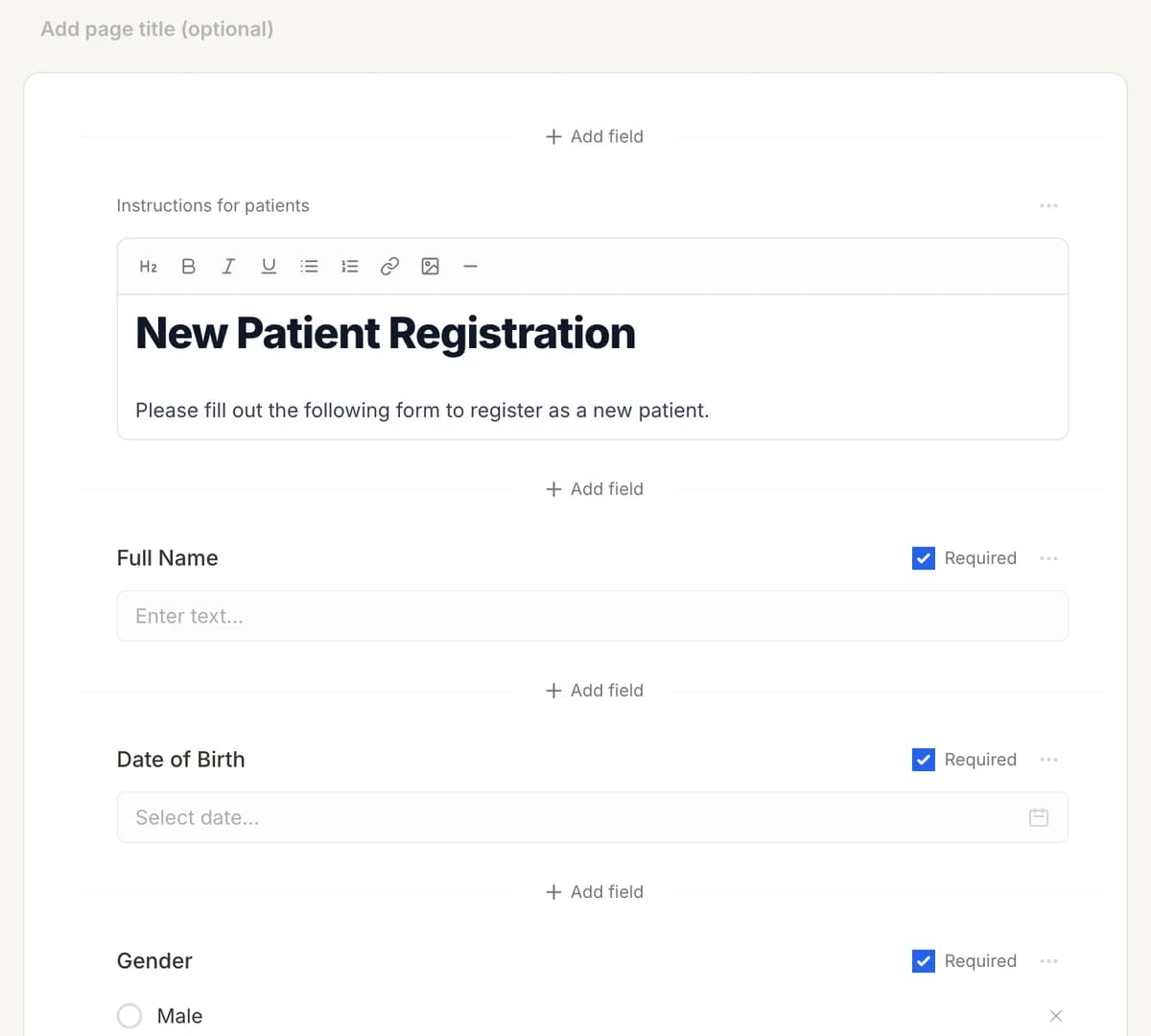
Getting started with this template takes just a few minutes. Sign up for a free Formisoft trial, then select the Osteoporosis and Fracture History Form from the template library. The form is ready to use immediately, but you can customize every field, add your practice logo, and adjust the layout to match your workflow.
Setup steps
- 1Choose the template. Find the Osteoporosis and Fracture History Form in the template library and click “Use this template” to add it to your account.
- 2Customize fields. Add, remove, or reorder any of the 10 fields. Set fields as required or optional based on your practice needs.
- 3Brand it. Upload your logo, pick your colors, and add a custom welcome message so patients see your practice identity.
- 4Share with patients. Send the form via SMS, email, or embed it on your website. Patients complete it on any device before their visit.
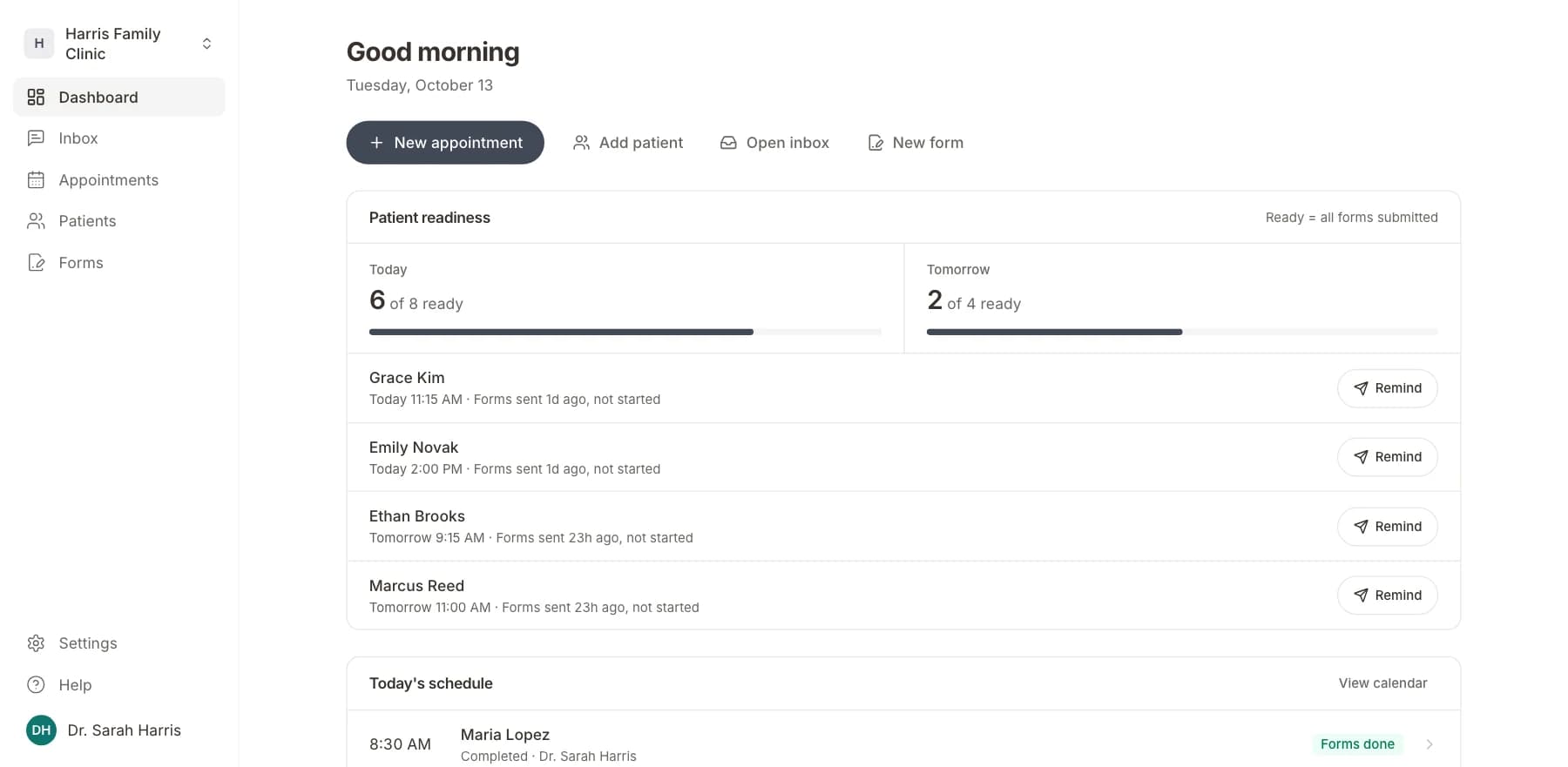
- 5Review submissions. Responses appear in your dashboard in real time. Patient records are created automatically from the data collected.
Frequently asked questions
Is the Osteoporosis and Fracture History Form HIPAA compliant?
Yes. All Formisoft templates, including the Osteoporosis and Fracture History Form, are HIPAA compliant. Data is encrypted with 256-bit AES at rest and TLS 1.3 in transit. A Business Associate Agreement (BAA) is included on every plan.
Can I customize the fields in this template?
Absolutely. You can add, remove, reorder, or modify any of the 10 fields. You can also add conditional logic, new pages, file uploads, e-signatures, and payment fields.
How do patients fill out this form?
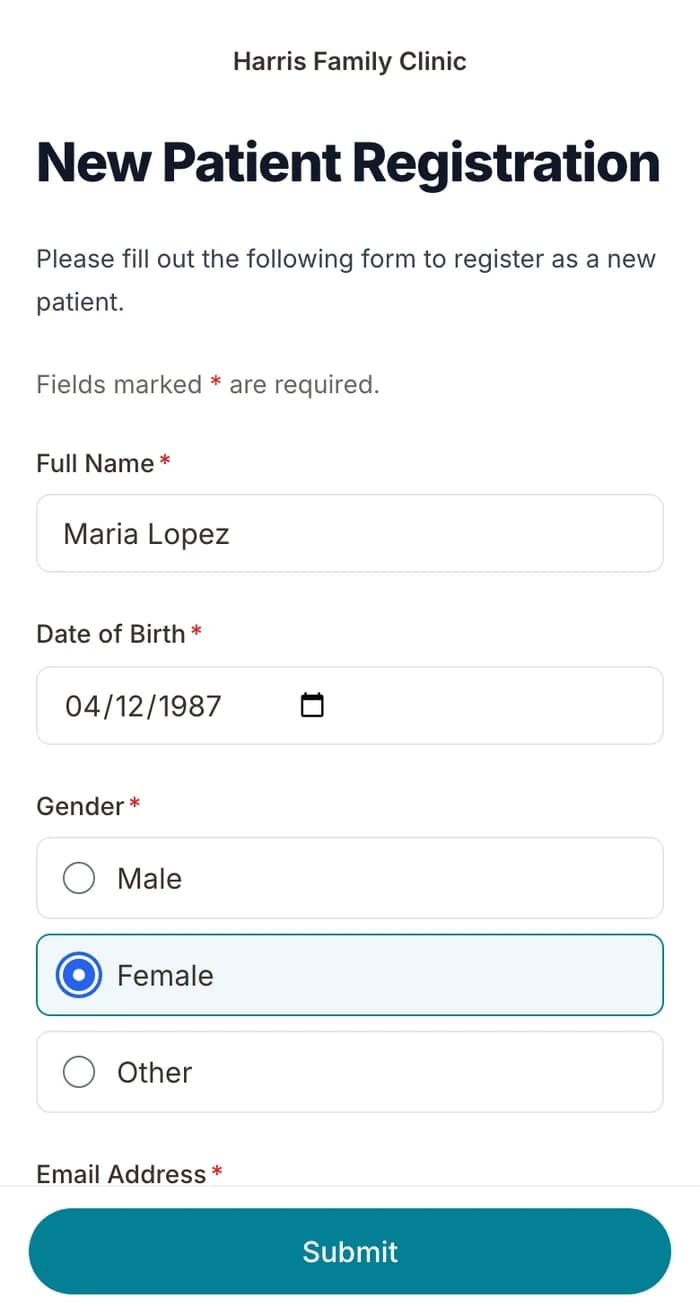
Patients receive a link via SMS, email, or QR code. They complete the form on their phone, tablet, or computer before their appointment. No app download required.
Can I send this form automatically before appointments?
Yes. Formisoft's workflow automation can send intake forms automatically when an appointment is booked. You can set the timing (e.g., 48 hours before the visit) and include reminders for patients who haven't completed it.
Does this template work on mobile devices?
Yes. The Osteoporosis and Fracture History Form is fully responsive and works on any device. Most patients complete intake forms on their phone, so every template is optimized for mobile-first use.
Start with this template
Sign up and start customizing the Osteoporosis and Fracture History Form for your practice. Set up in minutes.
Related templates
Rheumatology Intake Form
Rheumatology-specific intake covering joint symptoms, autoimmune screening, morning stiffness assessment, prior biologic therapy, and functional limitations. For rheumatologists and autoimmune disease clinics.

Endocrinology Intake Form
Endocrinology-specific intake covering diabetes management, thyroid disorders, hormonal symptoms, metabolic screening, and endocrine medication history. For endocrinologists and diabetes care centers.

Orthopedics Intake Form
Orthopedic intake covering musculoskeletal complaints, injury mechanism, imaging history, joint function assessment, and surgical history. For orthopedic surgeons and sports medicine practices.