Vanderbilt ADHD Assessment
Asks about child's name, relationship to child, and fails to give attention to details. Built for pediatric practices conducting initial ADHD diagnostic evaluations.
- Questions
- 18
- Pages
- 2
- Time
- about 5 min
Your practice
Vanderbilt ADHD Assessment
Page 1 of 2 · Your information
Live preview. Tap through it like a patient.
Who it is for
- Pediatric practices conducting initial ADHD diagnostic evaluations
- Child psychiatry clinics monitoring medication response and side effects
- School-based health centers supporting educational accommodation referrals
- Developmental-behavioral pediatrics assessing comorbid conditions
What's inside
Before you publish: Clinical review required: this worksheet does not calculate scores, diagnose, or recommend treatment. Confirm the questions and response options against your approved assessment protocol before use.
Page 1 · Your information
- Child's NameText
- Date of BirthDate
- Relationship to ChildDropdown · 3 choices
- Fails to give attention to detailsLong Text
- Difficulty sustaining attention in tasksLong Text
Page 2 · Additional details
- Leaves seat when remaining seated is expectedLong Text
- Runs or climbs in inappropriate situationsLong Text
- Talks excessivelyLong Text
- Blurts out answers before questions are completedLong Text
- Difficulty waiting turnLong Text
From form to a ready patient
01
Make it yours
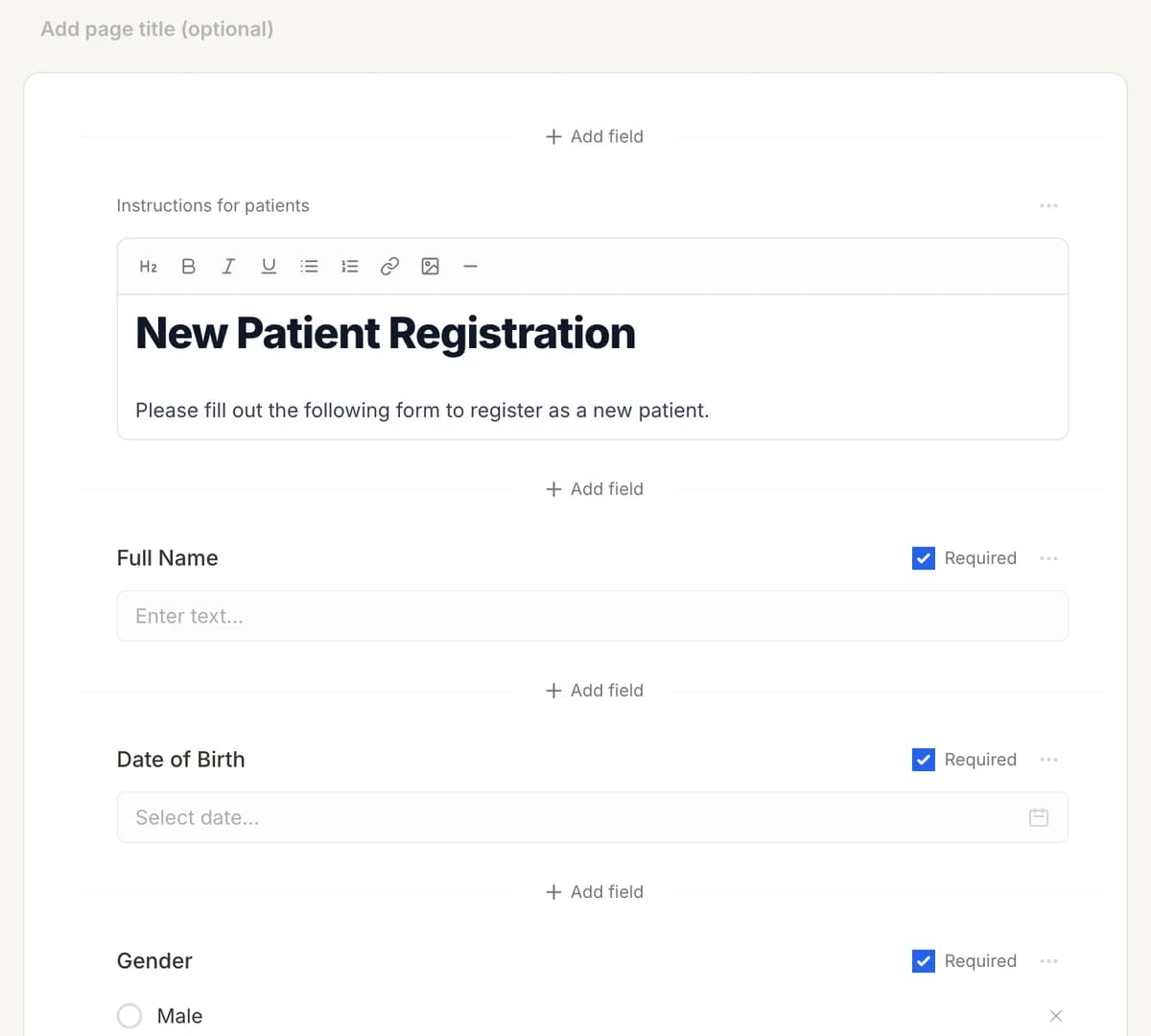
Reword, reorder, or add to the Vanderbilt ADHD Assessment, and add your logo.
02
Patients finish it at home
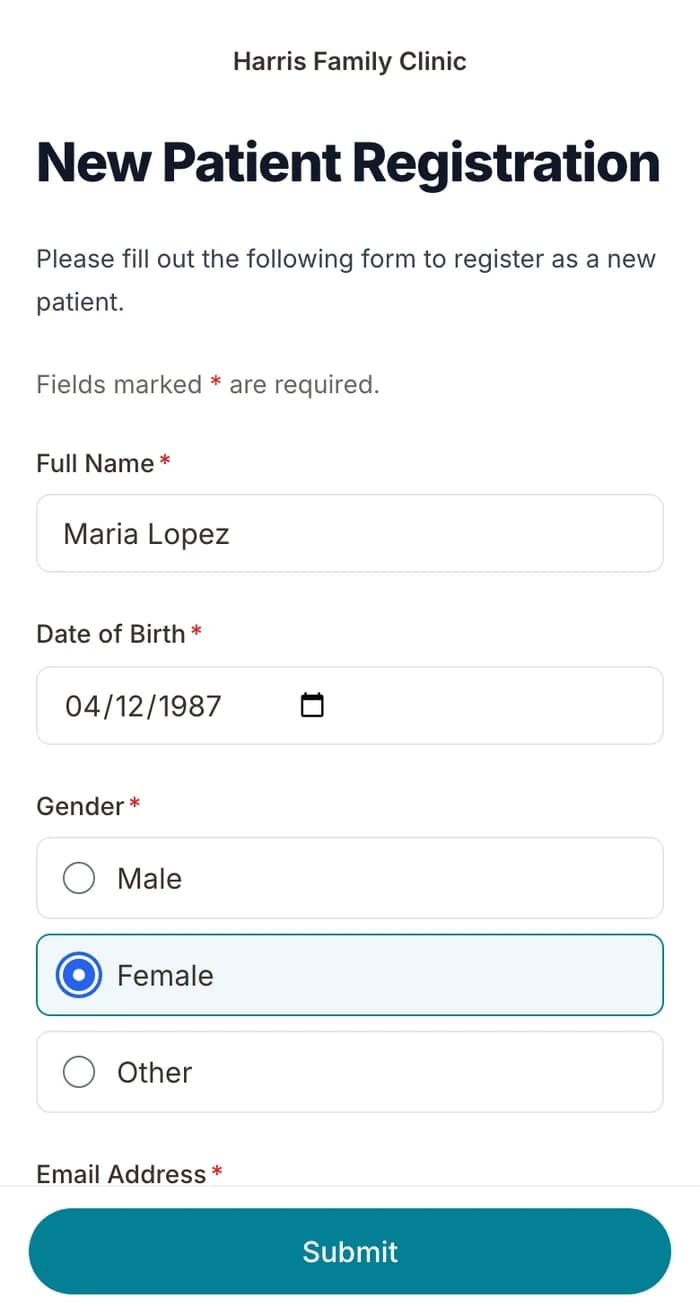
A secure link by text or email, filled out on their phone before the visit. No app.
03
Your team sees who is ready
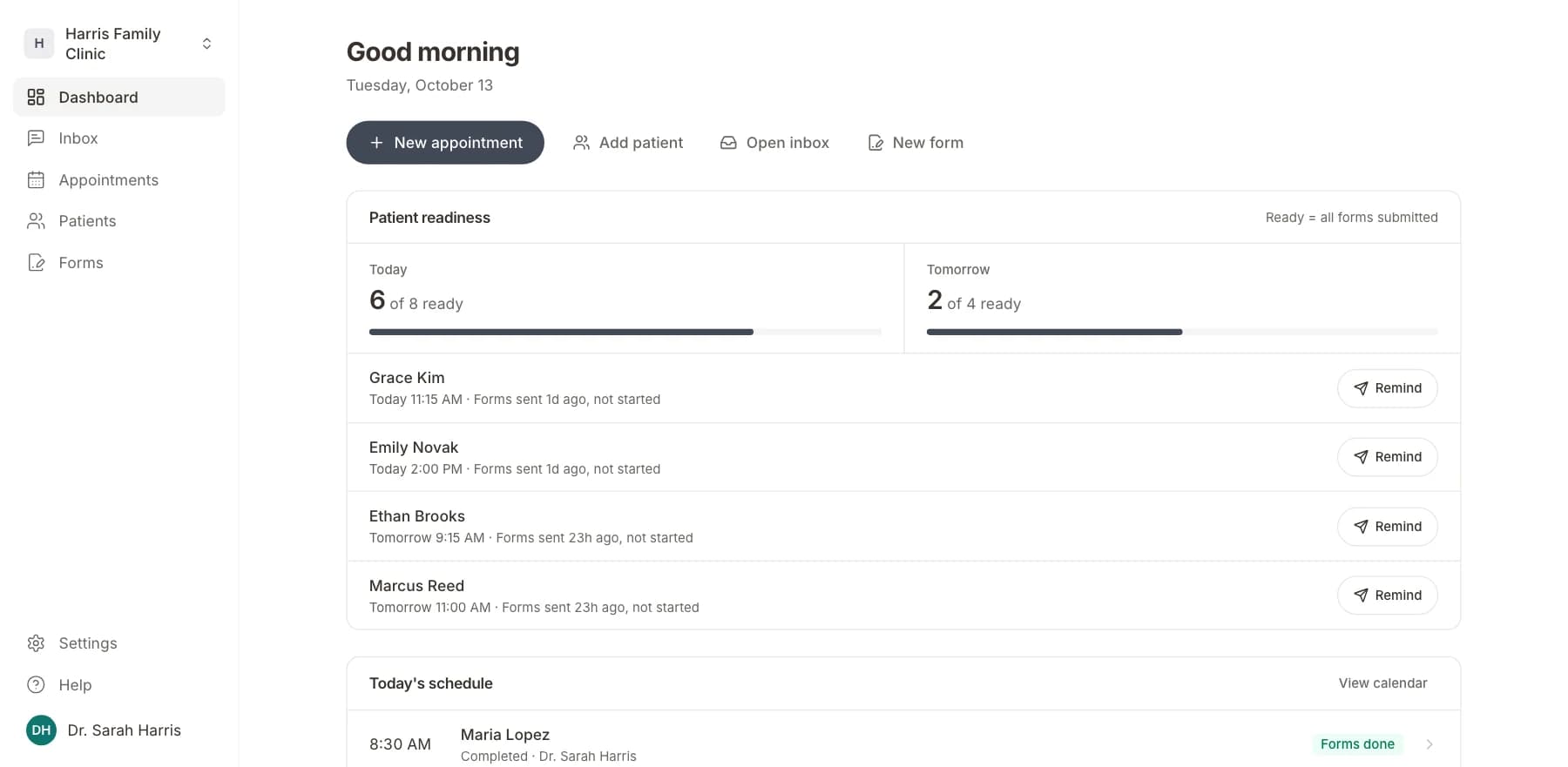
Each visit shows as ready once its forms are in. Answers land on the patient record.
Related templates
All templatesVanderbilt ADHD Assessment ScreeningScreening · 14 questions
Mental Status Examination (MSE)Assessment · 16 questions
Pediatric Asthma Severity AssessmentAssessment · 14 questions
Mental Health Treatment Consent FormConsent · 11 questions
ACE (Adverse Childhood Experiences) ScreeningScreening · 14 questions
Behavioral Health Intake FormIntake · 8 questions
Questions
Send it before the visit, so patients arrive ready.
Add the Vanderbilt ADHD Assessment to your account and make it yours in a few minutes.
Cancel anytime · BAA included