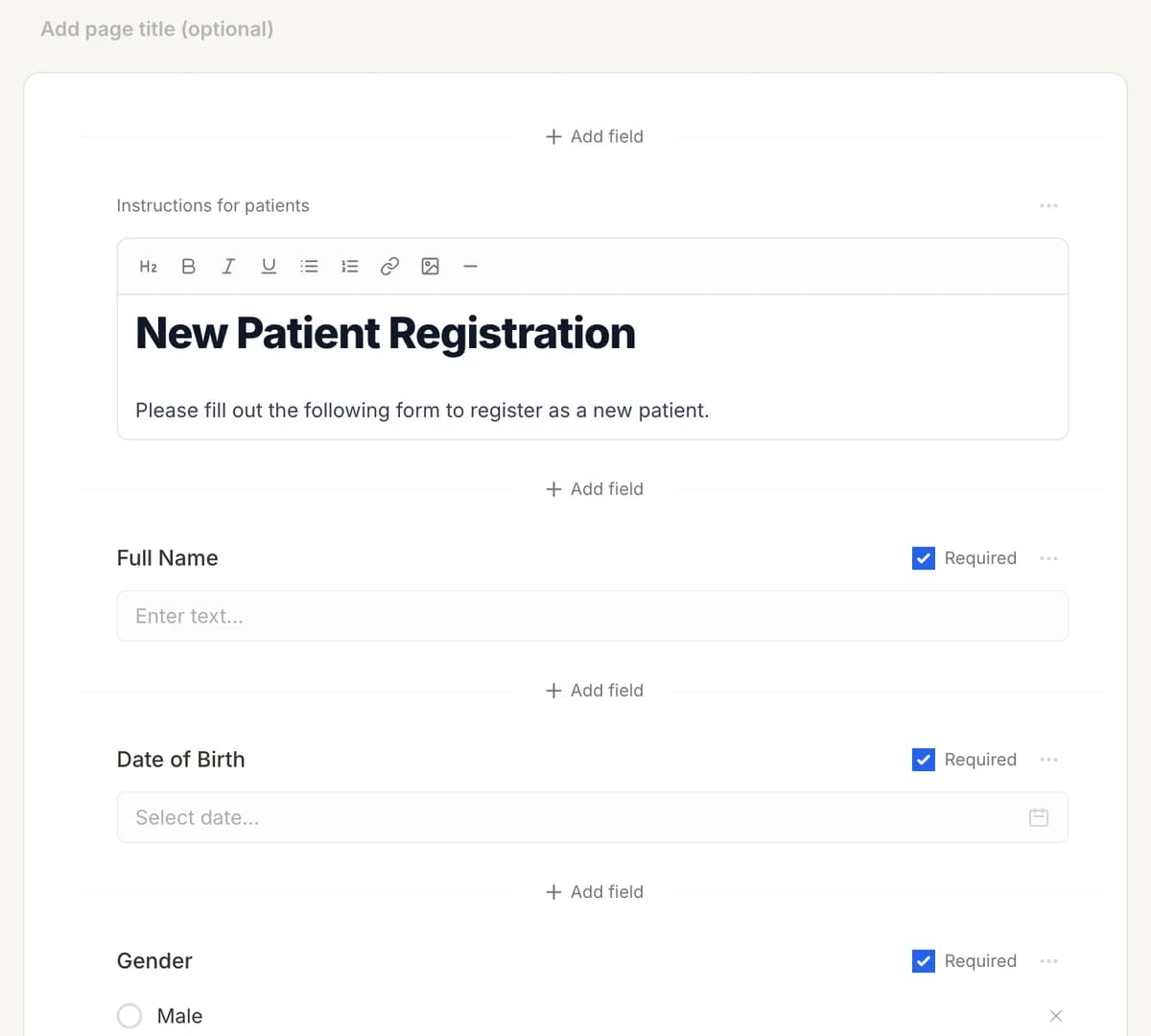
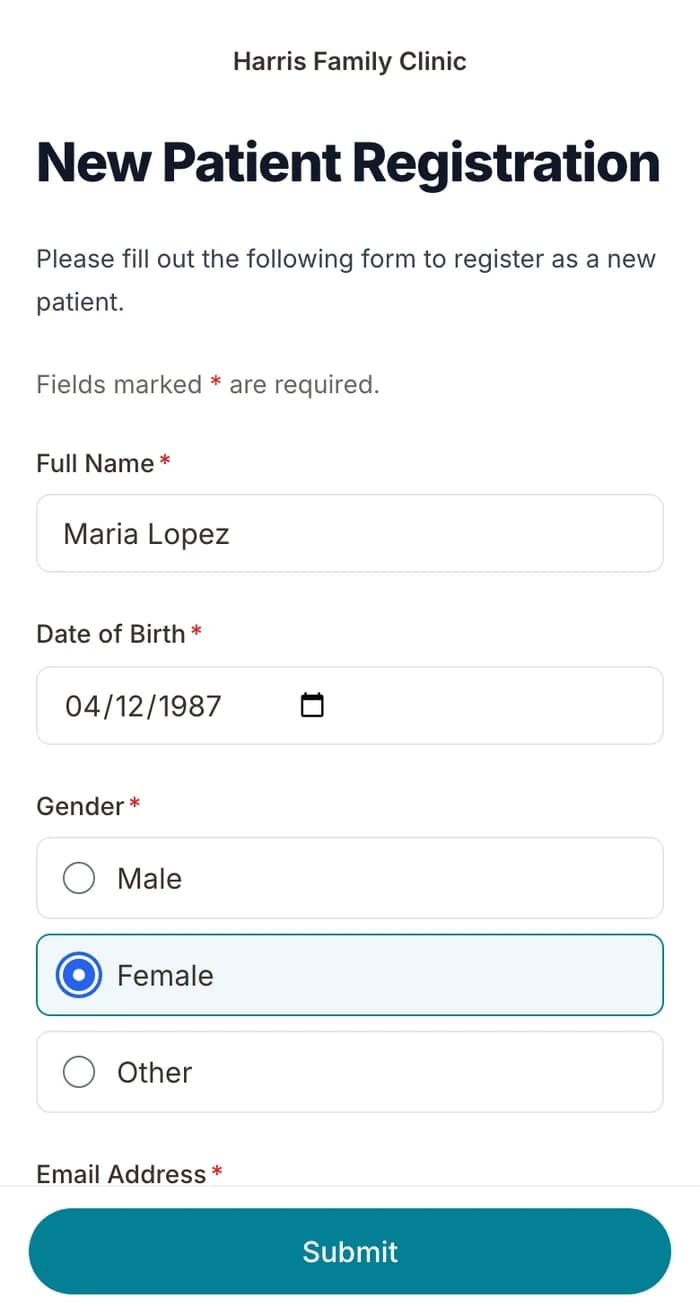
Form preview

The Bariatric Surgery Intake Form is purpose-built for bariatric and metabolic surgery programs, capturing the comprehensive medical, nutritional, and psychosocial history that bariatric surgeons and multidisciplinary teams need for surgical candidacy evaluation and perioperative planning. This template collects patient demographics alongside a detailed weight history including current weight, highest lifetime weight, weight at age 18, BMI calculation, duration of morbid obesity, and weight trajectory over the past decade. The obesity-related comorbidity assessment systematically screens for type 2 diabetes (with HbA1c, medication regimen, and insulin requirements), obstructive sleep apnea (with CPAP compliance and AHI from polysomnography), hypertension, dyslipidemia, non-alcoholic fatty liver disease (NAFLD/NASH), gastroesophageal reflux disease, osteoarthritis, stress urinary incontinence, polycystic ovarian syndrome, and pseudotumor cerebri.
Designed for MBSAQIP-accredited bariatric surgery centers, metabolic surgery programs, and multidisciplinary weight management clinics, this form includes sections for prior weight loss attempts (commercial diet programs, physician-supervised medical weight management, pharmacotherapy with specific agents such as GLP-1 receptor agonists, phentermine, or orlistat, very low-calorie diets), prior bariatric or gastrointestinal surgical history, nutritional assessment (current dietary patterns, eating behaviors, binge eating screening, history of eating disorders, vitamin and mineral supplementation), and a comprehensive surgical risk assessment including venous thromboembolism risk, functional status, cardiopulmonary evaluation, and the Obesity Surgery Mortality Risk Score (OS-MRS).
The psychosocial readiness section captures the patient's understanding of surgical options (Roux-en-Y gastric bypass, sleeve gastrectomy, duodenal switch, adjustable gastric band revision), realistic outcome expectations, support system, psychiatric history (depression, anxiety, substance use, history of self-harm), compliance with pre-operative program requirements (nutritional counseling sessions, psychological evaluation, supervised weight loss period), and insurance authorization documentation. All fields are HIPAA-compliant and meet the documentation requirements for insurance pre-authorization, which typically requires demonstration of medical necessity through BMI criteria, comorbidity documentation, and evidence of prior supervised weight loss attempts.
What's included
- Comprehensive weight history and BMI documentation
- Obesity-related comorbidity screening and staging
- Prior weight loss attempt and diet history tracking
- Nutritional assessment and eating behavior screening
- Psychosocial readiness and psychiatric history evaluation
- Insurance pre-authorization documentation support
- E-signature capture
- Structured medication list with dosage and frequency tracking
- Insurance information collection with carrier and policy details
Who uses this template
- MBSAQIP-accredited bariatric surgery programs
- Metabolic surgery and revision bariatric surgery practices
- Multidisciplinary weight management clinics
- Insurance pre-authorization and medical necessity documentation
All form fields
20 fields across 3 pages. Customize any field after signing up.
Use this template
Sign up and start customizing the Bariatric Surgery Intake Form for your practice. 30-day money-back guarantee.
$79.99/mo · Cancel anytime · HIPAA compliant
Related templates

BMI & Body Composition Form
BMI calculation and body composition tracking form for monitoring weight status, waist circumference, and body fat percentage across patient visits.

Acupuncture Intake Form
Acupuncture-specific intake covering chief complaint, TCM constitution assessment, pain mapping, lifestyle and emotional health, and treatment history. For licensed acupuncturists and integrative medicine clinics.

Addiction Medicine Intake Form
Addiction medicine intake covering substance use history, withdrawal risk assessment, medication-assisted treatment screening, mental health comorbidities, recovery support systems, and treatment readiness. For addiction medicine practices and MAT programs.